


Featured
May is Therapeutic Court Month!
Let’s celebrate all your accomplishments
- Day 26: Franklin County Therapeutic Court Builds Community Through Annual Scavenger Hunt
- Day 25: It’s Therapeutic Court Month in Spokane County!
- Day 24: Alumni Spotlight: Yakima County Drug Court Graduate Natalia Camarillo
- Day 23: Alumni Spotlight: Britta Harrison- Kitsap County Drug Court
- Day 22: Alumni Spotlight: Snohomish County Drug (Recovery) Court Graduate Seth Newsome
- Day 21: Grant County celebrates during Therapeutic Court Month!
- Day 20: Alumni Spotlight Zell Hughes- Benton County Drug Court Graduate
- Day 19: King County declares May as Therapeutic Court Month!
- Day 18: Alumni Spotlight: Joe Barsana
- Day 17: Stevens County Drug Court Graduation
- Day 16: Benton County opens first Drug Court office!
- Day 15: Alumni Spotlight: Marshall D. – Pacific County Drug Court
- Day 14: Cowlitz County Drug Court teams up with local agencies for beautification projects
- Day 13: Grant County Alumni Spotlight: Gerry Casteneda
- Day 12: Clark County Recognizes May as Therapeutic Court Month
- Day 11: Alumni Spotlight: Jordan A- Grays Harbor Therapeutic Court
- Day 10: Lewis County Drug Court continues to thrive
- Day 9: Grays Harbor County recognizes National Therapeutic Court Month
- Day 8: Alumni Spotlight: Michael Mohn- Pierce County Drug Court
- Day 7: Alumni Spotlight: Daniel Miller- Lewis County Drug Court
- Day 6: We Can Alumni Group- Mason County
- Day 5: Alumni Spotlight: Karis Bjerke- King County Drug Court Alumni
- Day 4: Spokane County
- Day 3: Snohomish County
- Day 2: Kitsap County
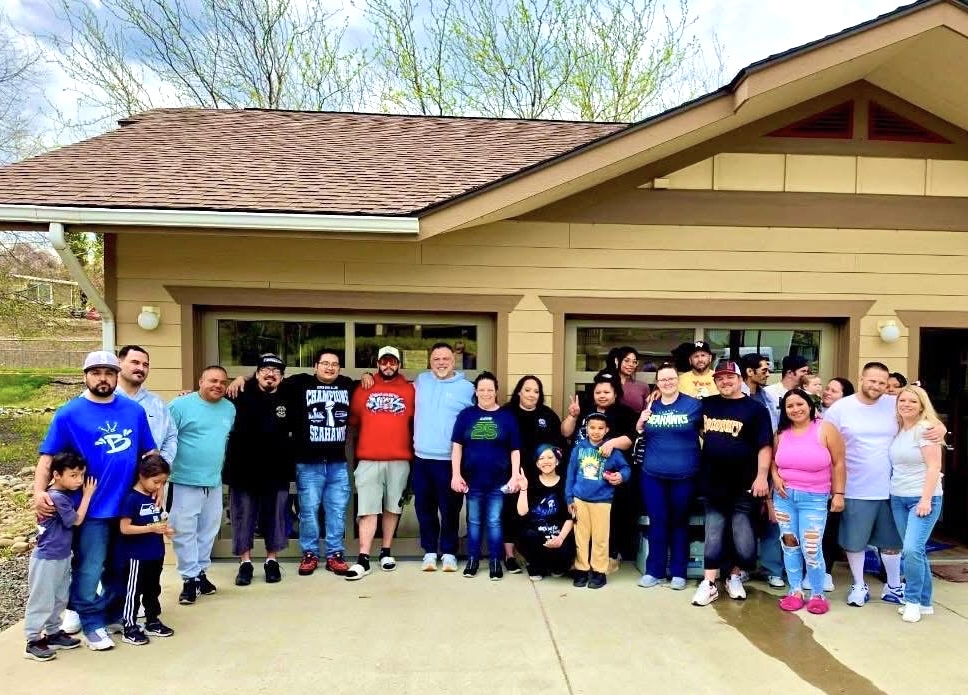
- Day 1: The Yakima Drug Court Alumni Group
Please send any stories and photos to angie.hutton@clark.wa.gov, and we’ll flood our page with all the hard work, fun and determination that therapeutic courts have to offer across the state!
Day 1: The Yakima Drug Court Alumni Group
They were established to create a space where graduates can stay connected and current participants can learn from those who have successfully completed the program. Their mission is to celebrate recovery, support lifelong growth, and strengthen the community. Each month, they gather to recognize recovery milestones, share experiences, and uplift one another. Through mentorship, peer support, and community service, they foster connection, give back, and work to reduce the stigma surrounding recovery. Together, they are committed to supporting one another, inspiring change, and building a stronger Yakima community.
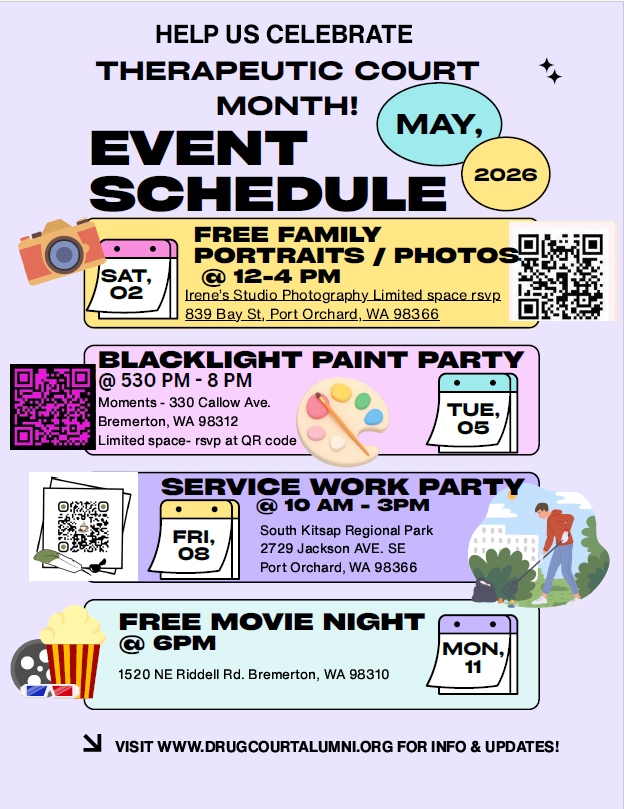
Day 2: Kitsap County
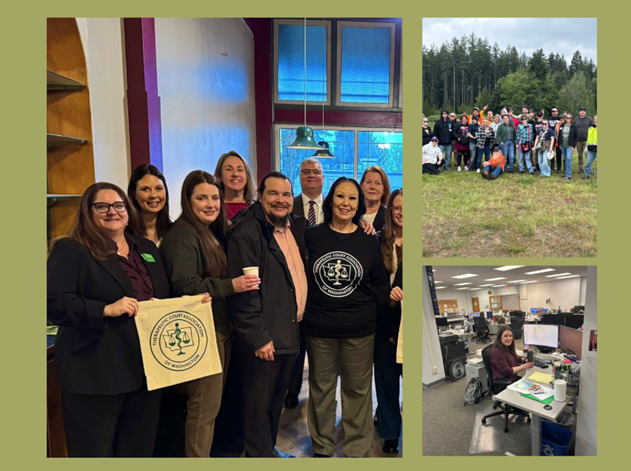
Kitsap County fills May with Therapeutic Court Month celebrations! Take a look at all the wonderful activities Kitsap County has to offer during Therapeutic Court Month as well as their signed proclamation declaring May as Therapeutic Court Month!!!
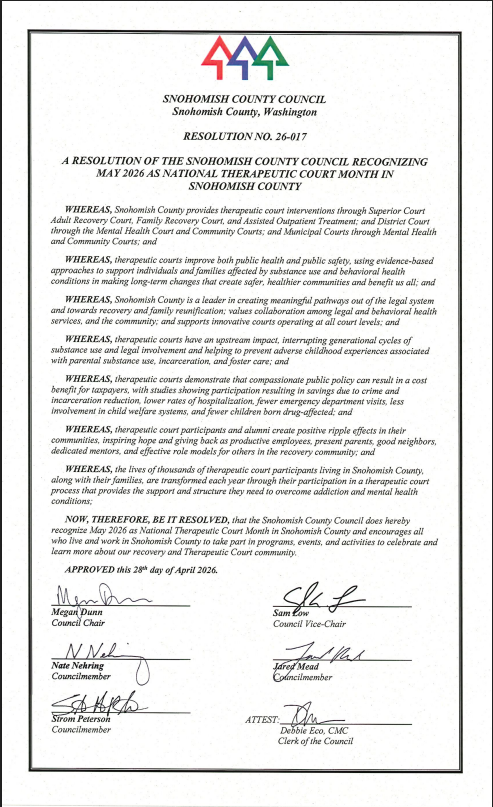
Day 3: Snohomish County
Snohomish County Council signed resolution on May 28, 2026 recognizing May as National Therapeutic Court Month. Way to go Snohomish County!
Day 4: Spokane County
Reader spotlight: Treatment courts reduce crime, save lives and strengthen communities
Every day in courtrooms across our state, judges see individuals whose criminal behavior is driven by untreated substance use and mental health disorders. Unless these underlying issues are addressed, many will continue to cycle through the justice system, straining law enforcement, courts, and taxpayers. Treatment courts are the most effective strategy for breaking this cycle. In fact, they are the most successful justice intervention in our nation’s history.
Treatment courts are an accountability-driven approach that combines rigorous supervision and judicial oversight with evidence-based substance use and mental health treatment. Their impact extends far beyond reducing crime. Treatment courts save lives, strengthen families, improve employment and housing stability. They make our community better and stronger. Reduced law enforcement and first-responder interventions conserves limited resources and make them more available to focus on community safety.
May is National Treatment Court Month and the perfect time to share the many ways Spokane’s treatment courts are making a positive impact on the community. Spokane Superior Court’s Drug Court is celebrating its 30th year of doing just that. In addition to Drug Court, Superior Court operates a felony Mental Health Court. Spokane County District Court and Spokane Municipal Courts similarly use other treatment courts: Veterans Court, intensive DUI courts, Community Court, and a joint regional mental health court for misdemeanors.
Treatment courts regularly see participants succeed and not return to the criminal justice system. Most of them enter treatment court after years of struggling with a substance use disorder or mental health conditions – often both. They arrive because they resorted to committing crimes to support substance use disorder or untreated behavioral health conditions – often both. Many have been arrested numerous times without anything changing. While facing incarceration, they get the chance to participate in a treatment court. There, they are before the court frequently while they receive rigorous treatment and counseling. With the help of treatment court teams, they begin to put their lives back together.
Research supports this: The largest and most comprehensive multisite study ever conducted on treatment courts found reductions in crime averaging 58% and savings of more than $6,000 for every individual served. Researchers have also found that treatment courts produce significant improvements in education, employment, housing, financial stability, and family reunification.
Treatment courts are our most effective approach at the intersection of substance use disorder, mental health, and justice involvement. This year’s National Treatment Court Month should serve as a call to action to expand access to this proven community-based solution. Because when one person, family, and community rises, we all rise.
Judge Shelley Szambelan- Superior Court Felony Drug Court & Mental Health Court
Judge Kristin O’Sullivan- Spokane Municipal DUI Court
Judge Mary Logan- Spokane Municipal Community & Veterans courts
Judge Jeff Smith- Spokane County District Drug & Regional Mental Health courts
Judge Patrick Johnson- Spokane County District Veterans Court
Read full article here: Reader spotlight: Treatment courts reduce crime, save lives and strengthen communities
Day 5: Alumni Spotlight: Karis Bjerke- King County Drug Diversion Court (KCDDC) Alumni
In 2009, Karis was accepted into the King County Drug Diversion Court (KCDDC) program. She successfully graduated Drug Court in 2011. She decided to “Give back the gifts that were given to me” by obtaining her substance use degree and working as a treatment counselor. She went on to continue her education, receiving her BSSW and MSW degrees. Today, Karis is now the Clinical Practices Manager with Pioneer Human Services at their King County Residential Treatment Program. Karis shares with great appreciation for KCDDC. “If it wasn’t for God and KCDDC, I wouldn’t be where I am today. Drug Court provided me with encouragement, accountability, and a structure that I desperately needed. Oftentimes, the Court knew what I needed more than I did. To this day, if I needed anything, I could call them, and they would offer guidance or support. My relationship with KCDDC didn’t end when I graduated. Being accepted into KCDDC saved my life and helped me become who I am today.”
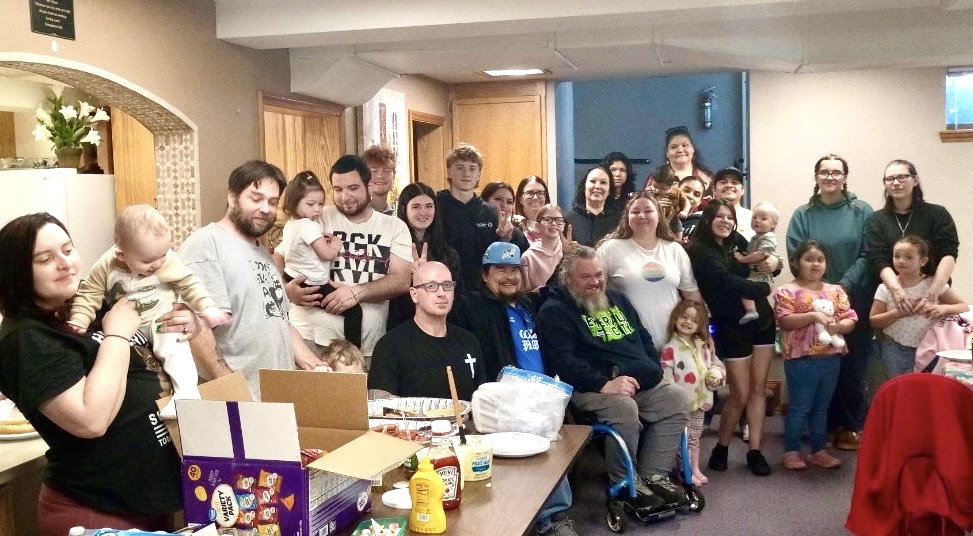
Day 6: We Can Alumni Group- Mason County
The WE CAN Alumni Group represents Mason County Therapeutic Court alumni and is a space built on connection, growth, and real support beyond the program. It brings together graduates, current participants, and families to stay engaged, build relationships, and keep moving forward in recovery.
Through gatherings, events, and shared experiences, the group creates opportunities to celebrate progress, support one another, and stay grounded in accountability. By keeping alumni involved and families included, WE CAN Alumni strengthens recovery, builds community, and reminds people they’re not alone.
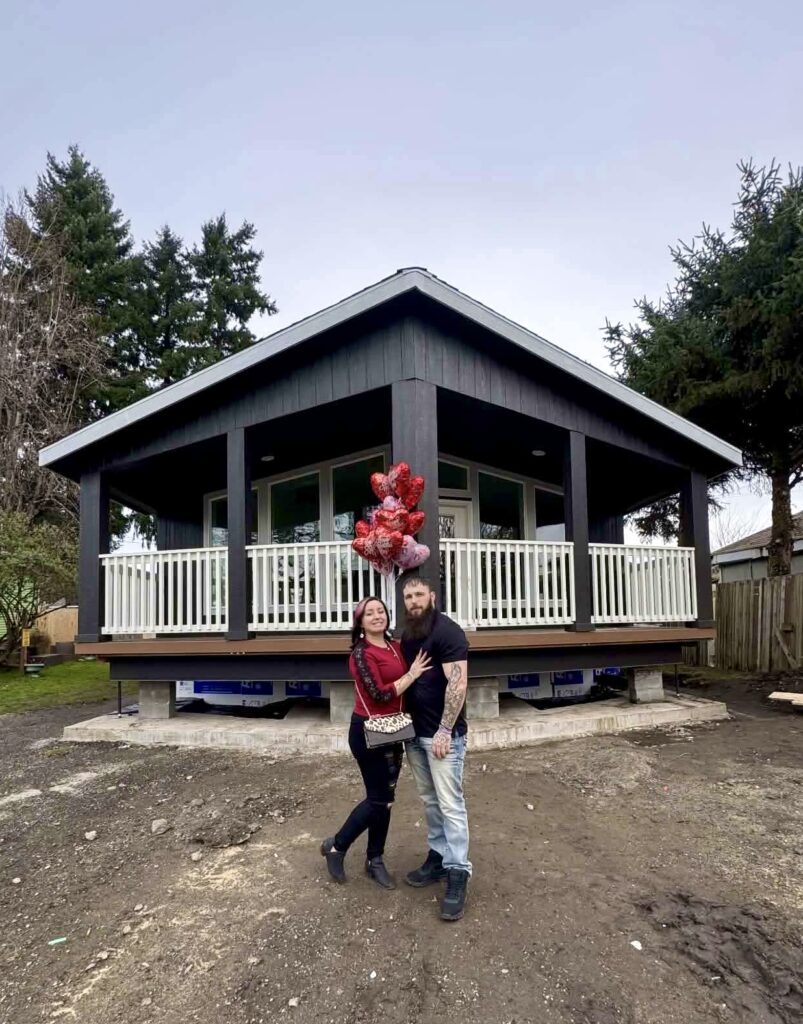
Day 7: Alumni Spotlight: Daniel Miller- Lewis County Drug Court
Daniel Miller is a proud graduate of the Lewis County Drug Court program, having completed it on December 5, 2023. Since graduating, he has continued to build a positive and stable life—recently becoming engaged to his fiancée, purchasing a home, and launching his own peptide business. He remains actively involved with Lewis County Drug Court and will always stay connected to the program that helped transform his life. It gave him the tools, perspective, and support to realize that there is so much more to life, and he is committed to carrying those lessons forward.
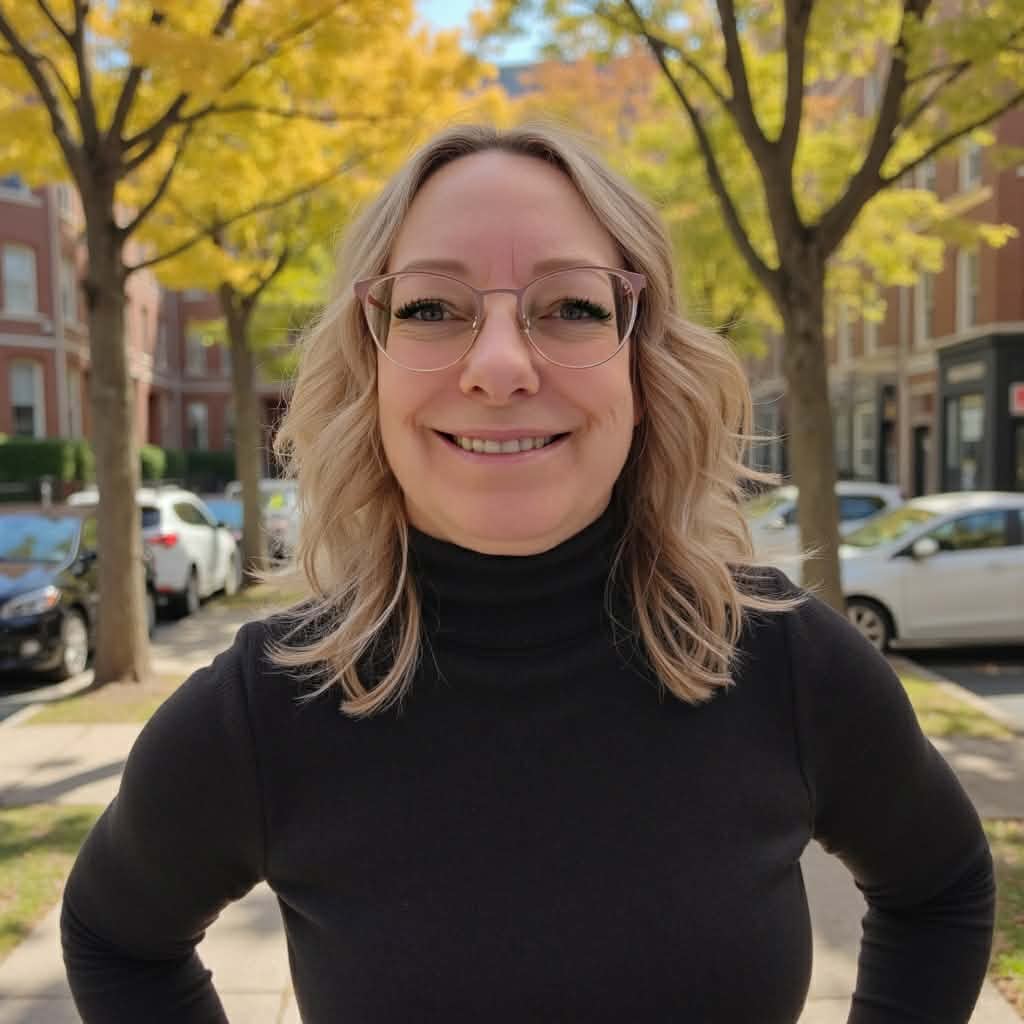
Day 8: Alumni Spotlight: Michael Mohn- Pierce County Drug Court
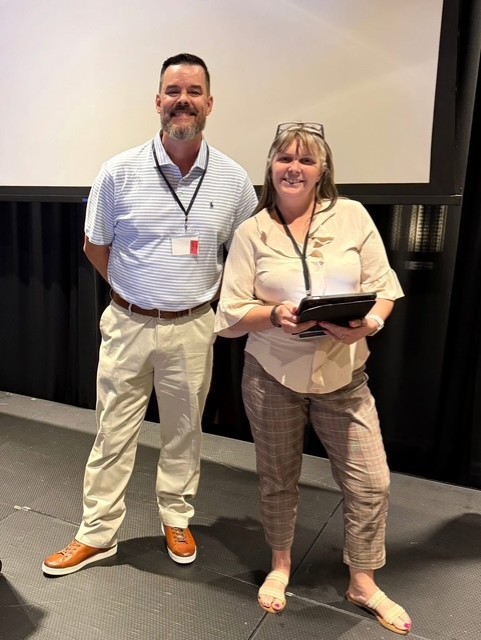
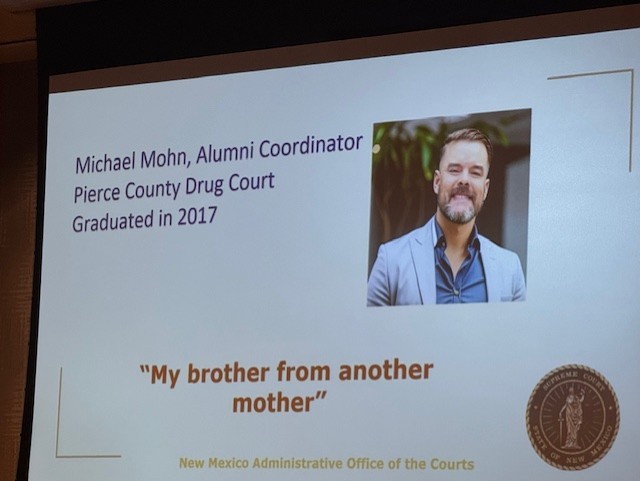
Graduating from the Pierce County Drug Court in 2017 is one of the proudest moments of my life. This journey challenged me in every way, but it also gave me the tools, accountability, and support I needed to truly change. I’m proud not just of completing the program, but of the man I’ve become in the process. I am someone who shows up, takes responsibility, and lives with purpose. One of my greatest accomplishments is being able to give back as an alumni coordinator for Pierce County Alliance, supporting others who are walking the same path I once did. We have an abundant alumni program that is creating a culture of family within the drug court graduates and clients. Recovery has given me a second chance, and I’m proud to use my story to help others believe that change is possible.
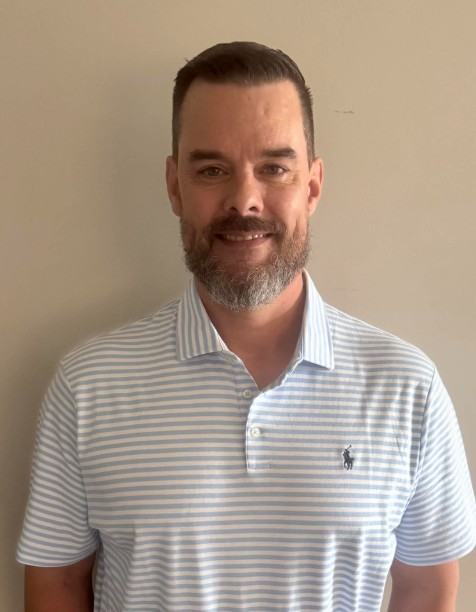
Mike, along with Jami lead a breakout session on “Planning Events- Having fun in Recovery” at the New Mexico Courts Alumni Summit. The session s was noted to be engaging, and informative. He was also selected to do a keynote speech! Their presentation was such a huge hit with significant national attention, and they been asked to do their presentation to numerous other state conferences as well.

Day 9: Grays Harbor County recognizes National Therapeutic Court Month
At its regular meeting on May 6, the Board of County Commissioners adopted a proclamation to observe May as National Therapeutic Court Month in Grays Harbor County.
In recognition of May as National Treatment Court Month, Grays Harbor County is celebrating ongoing efforts to address substance use and mental health disorders through the expansion and success of local therapeutic court programs.
“Therapeutic courts are one of the most effective strategies we have for breaking the cycle of crime and addiction,” said District 3 Commissioner Vickie Raines. “We are proud of the collaborative work being done across both District and Superior Court levels to promote recovery, save taxpayer dollars and improve public safety.”
This year’s observance coincides with the launch of the Grays Harbor County District Court DUI Therapeutic Court, which offers enhanced supervision, treatment, and accountability for high-risk individuals convicted of driving under the influence. This new court is part of a broader, countywide commitment to therapeutic justice and rehabilitation as an alternative to traditional incarceration.
Grays Harbor County now operates two therapeutic court divisions:
District Court DUI Therapeutic Court, focusing on reducing recidivism among repeat DUI offenders through structured treatment and monitoring, and Superior Court Therapeutic Court, which offers a comprehensive, team-based approach to helping individuals facing felony charges who also struggle with substance use and mental health disorders.
Over 4,000 treatment courts nationwide are holding events this month to raise awareness of their success in reducing criminal behavior and supporting individuals and families in crisis. These courts represent the most successful justice system intervention in U.S. history for addressing underlying behavioral health issues that contribute to criminal conduct.
Grays Harbor County joins jurisdictions across the country in celebrating the lives changed through treatment courts and calls for continued support at the local, state, and federal levels to sustain and grow these vital programs.
Article provided by Wire Service. Read full article here: Grays Harbor County recognizes National Therapeutic Court Month
Day 10: Lewis County Drug Court continues to thrive
Leaders report that a dedicated home for participants, return of compliance officers has strengthened efforts


By Jacob Moore / jacob@chronline.com
Leaders of Lewis County therapeutic courts believe their program stands apart from many others across the state and the country thanks in large part to community support.
Lewis County Superior Court Judge J. Andrew Toynbee and Lewis County Drug Court Administrator Stephanie Miller gave a Drug Court update to the Lewis County Board of Commissioners during a business meeting Tuesday morning.
According to the report, the program is serving as many participants as it ever has, with 41 active participants. Most of those participants benefit from resources Lewis County Drug Court offers that others don’t.
According to Toynbee, the report was inspired in part by support from the board of county commissioners, who last summer approved a request to contract with the Centralia Police Department for two compliance officers.
The Lewis County Board of Commissioners approved that request in a meeting on Tuesday, July 15, 2025. Before the approval, the program had gone nearly three years without a compliance officer, according to Toynbee.
“Our program was suffering because of that,” he said.
“The compliance officers are something that sets our program apart,” Toynbee added. “Not every drug court has that.”
The Centralia Police Department has since assigned two officers — Adam Haggerty and Alan Bowers — to the program. As Miller has described in previous reporting by The Chronicle, compliance officers help the program conduct home checks and weekly or monthly check-ins. The position is also important to the administrators, because it can help Lewis County Drug Court participants develop a new and improved relationship with law enforcement.
Toynbee and Miller also touched on the Lewis County Drug Court house during the presentation as another resource for the local program that sets it apart from others. According to Toynbee, 34 of the court’s 41 current participants started the program living in the home owned by the county.
That is more than 80% of all participants in the program.
“They’re not back in their neighborhoods getting triggered by the things that cause them to come into our court,” Toynbee said. “They have a safe place, and it’s a supportive place. The people there are helping the new people.”
Toynbee added that 76% of participants are also employed or attending school full-time and 58% are licensed and insured. Three participants recently received GED diplomas. Since January, six participants moved out of the Drug Court house into their own stable housing, seven completed substance use disorder treatment, and four received coins for a year of court-certified clean time.
Engaging with the community, participants with Drug Court recently helped out at the Lewis County Homeless Connect event at the Southwest Washington Fairgrounds. Even more recently at the fairgrounds, participants helped set up the goat pens for the Spring Youth Fair and worked as security for the event, a job that Toynbee said was very important to the program and the participants.
“That is a big source of pride, both for our program and for our participants,” Toynbee said. “They get to be kind of authority figures. They’re trusted figures at the youth fair, providing security, and that’s a major thing for them to gain trust back, and to have the community put trust in them.”
The Lewis County Drug Court, like many in the state and across the country, offers individuals convicted of drug related offenses a structured path to vacating those sentences.
It requires sobriety, substance use disorder treatment, steady employment or education and many other essentials to help participants build a stable life.
Lewis County Drug Court is a felony diversion program where successful graduates have their criminal charges dismissed. The program typically lasts between 16 and 22 months, with participants receiving support and guidance from a team of professionals.
Read full article here: Lewis County Drug Court continues to thrive | The Daily Chronicle
Day 11: Alumni Spotlight: Jordan A- Grays Harbor Therapeutic Court
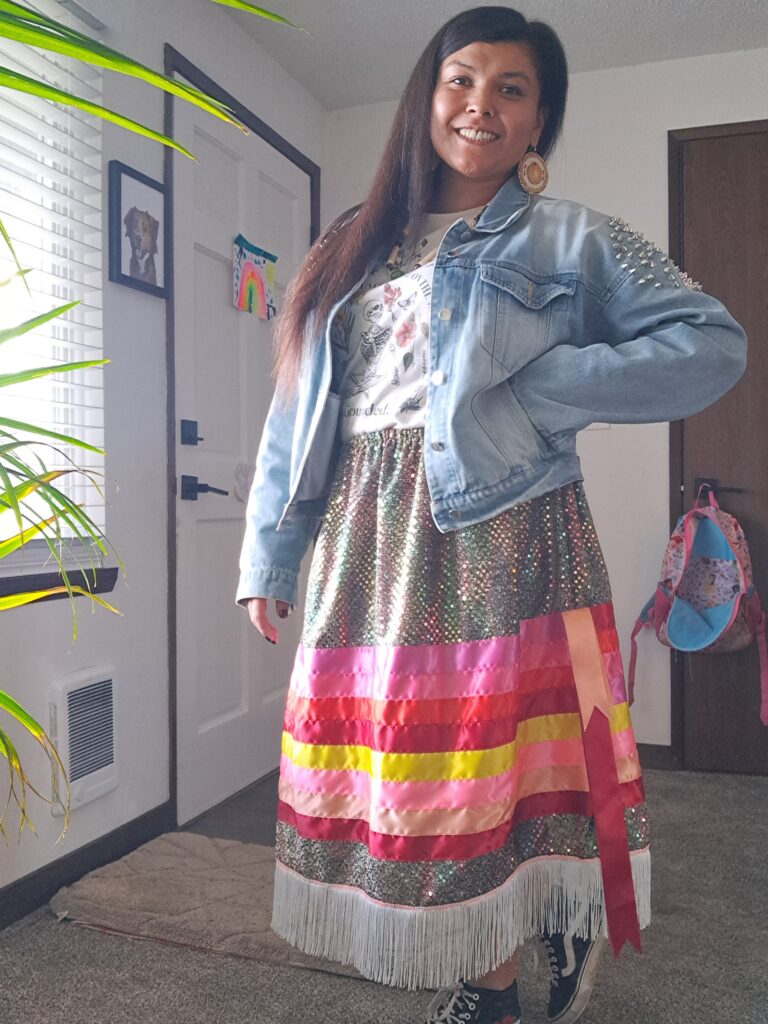
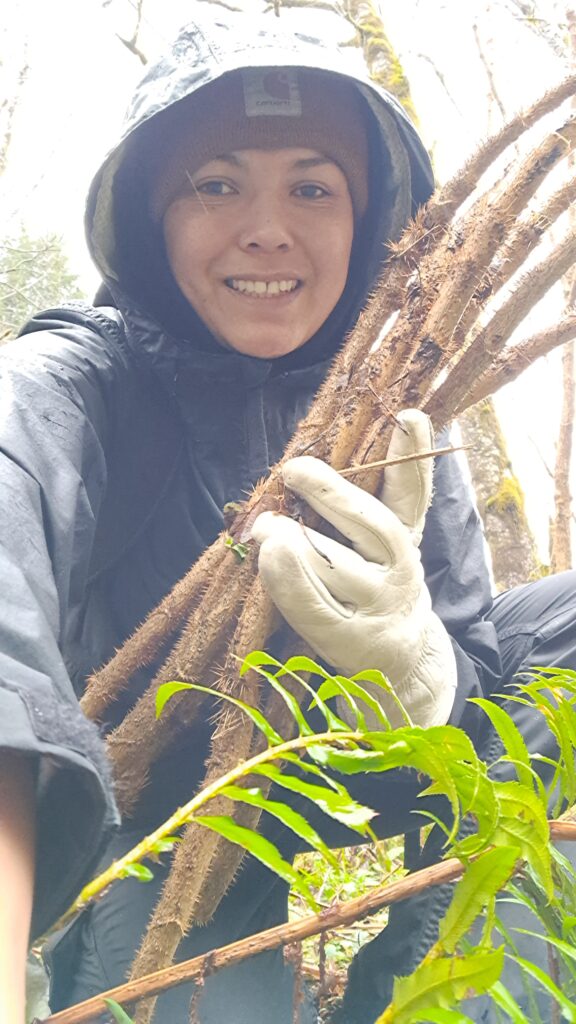
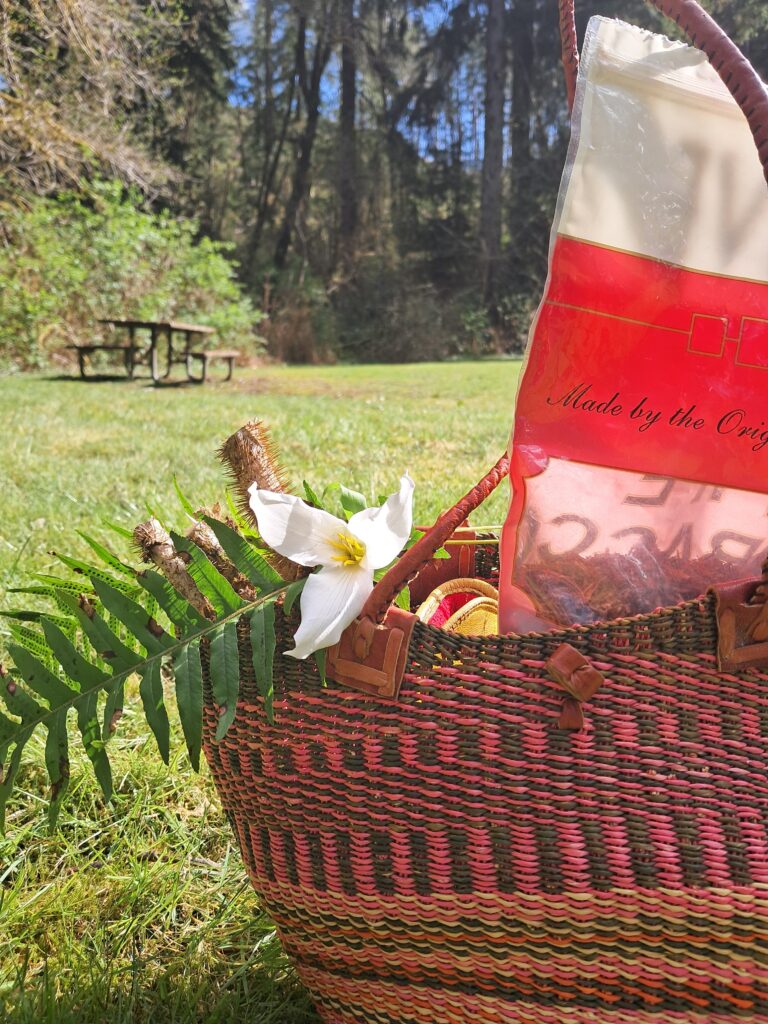
From Jordan:
Recovery’s been like floating a river. It’s always beautiful, and sometimes I’ve got to paddle, sometimes I’ve got to get out and walk a little bit and sometimes I’ve got to stop controlling it and just float. I’m in peer support training currently as I write this update and blazing my own path through the Native Pathways Program at Evergreen State College (which was a goal on my plan in drug court) finding my voice and actually using it. My sober date is June 12th, 2023, I am coming up on three years on June 12th, 2026 still rebuilding with intention. “Using my words and not my hands” was a silly joke with the judge, now it’s how I move. Steady. Accountable. Different. It’s harvest season, and I’m working with good intention. Preparing devil’s club glycerites for strength, protection, and resilience, drying nettle for teas that build inner strength and keep the body strong, learning to listen, harvest right, and make medicine in a good way. I stay grounded in sweat lodge, keeping my spirit right, and this year I’m making medicine for canoe journey. Showing up for community the way I once needed someone to show up for me. I’m not part of the program anymore. I’m walking my own path now, with intention, with voice, and with purpose.
Siokwil,
Jordan
Day 12: Clark County Recognizes May as Therapeutic Court Month
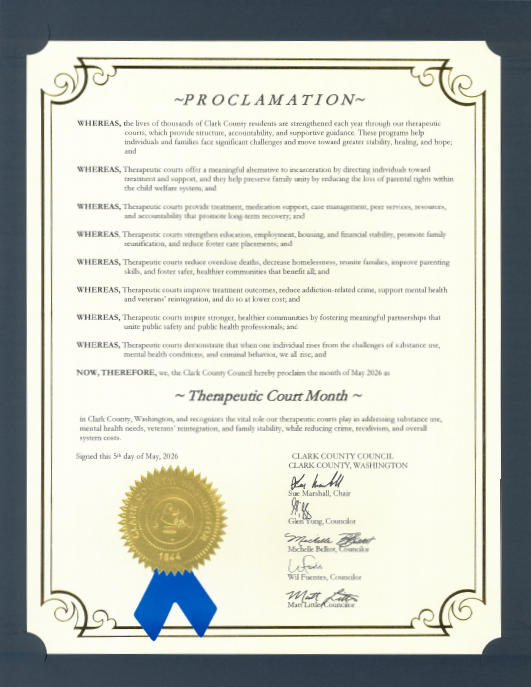
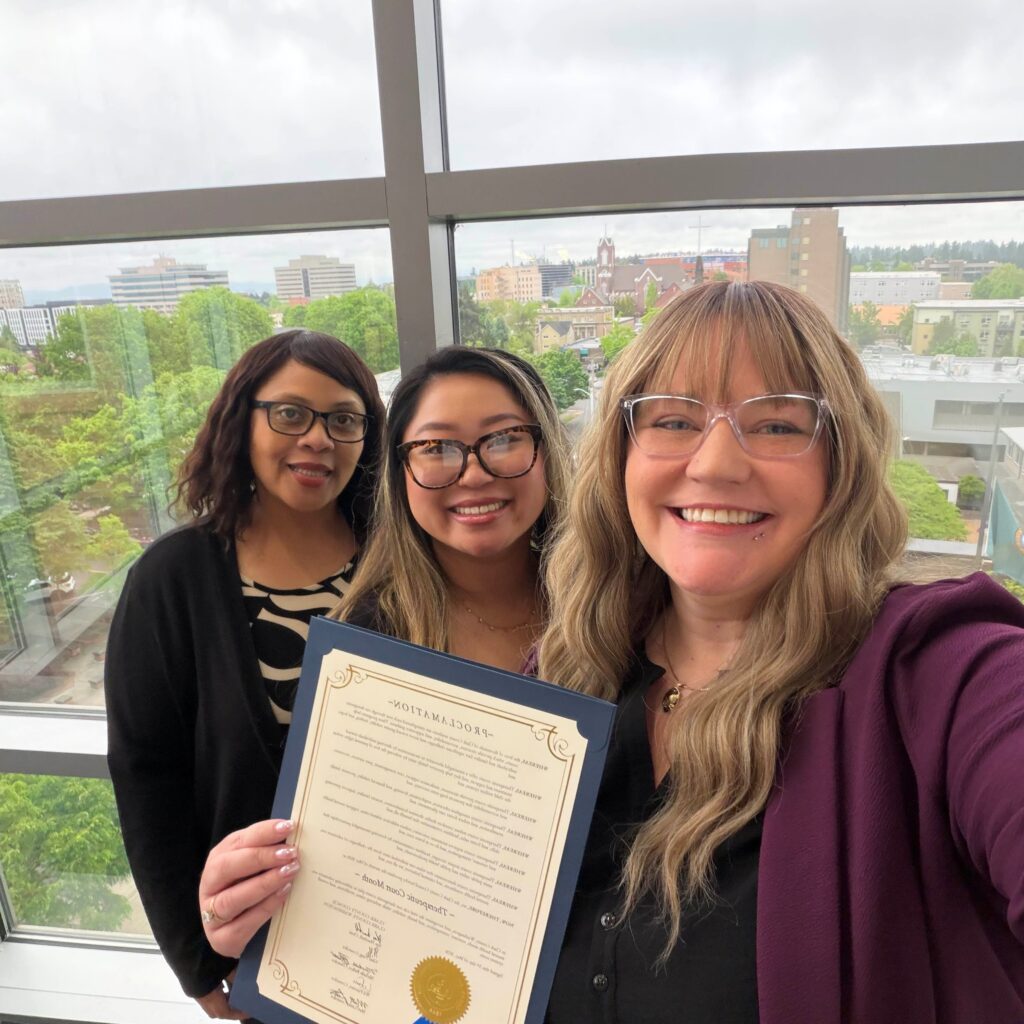
Tuesday, May 6, Clark County Councilors recognized May as Therapeutic Court Month. Coordinator Angie Hutton accepted the proclamation on behalf of Clark County District Court and Therapeutic Specialty Courts in both District and Superior Court. You may watch the proclamation acceptance here.
On Tuesday, May 5, 2026, Clark County District Court Therapeutic Specialty Court Coordinator Angie Hutton accepted a signed proclamation from the Clark County Council on behalf of District Court and the therapeutic court programs operating across both District and Superior Courts. The proclamation officially designates May 2026 as Therapeutic Court Month in Clark County, underscoring the county’s commitment to restorative justice and recognizing the meaningful impact therapeutic courts have on individuals, families, and the community.
Therapeutic courts are specialized programs that connect justice‑involved individuals living with mental health or substance‑use challenges to treatment, structure, and accountability—as an alternative to relying solely on incarceration. Their impact is seen clearly in Clark County, where more than 2,000 individuals have graduated from these programs, including 95 Veterans, and 171 families have been formally reunited. These outcomes reflect far more than numbers; they represent lives reclaimed, relationships restored, and futures rebuilt.
By making May Therapeutic Court Month, the Council affirms the value of second chances and the resilience of the people we serve. Graduates return to the community as healthier parents, employees, and neighbors, creating positive ripple effects across homes, workplaces, and future generations. This recognition honors the dedication of the teams who support them, and the courage of participants who choose recovery and transformation—a powerful reminder that our community believes in hope, healing, and the possibility of change.
Day 13: Grant County Alumni Spotlight: Gerry Casteneda
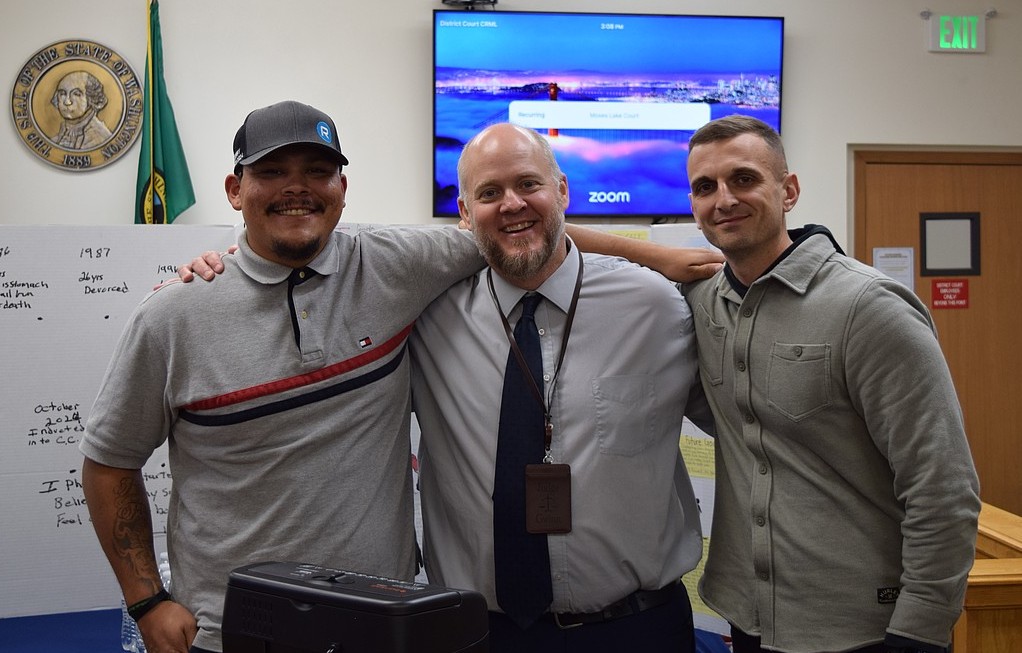
Gerry has become a first time father and is now working for the same treatment center he attended while in the Community Court program. He now mentors and encourages current Grant County Community Court participants by telling his story. Gerry Casteneda is pictured with Judge Gwinn and Gavan from Rebuilt Treatment Center in Spokane, WA.
Day 14: Cowlitz County Drug Court teams up with local agencies for beautification projects
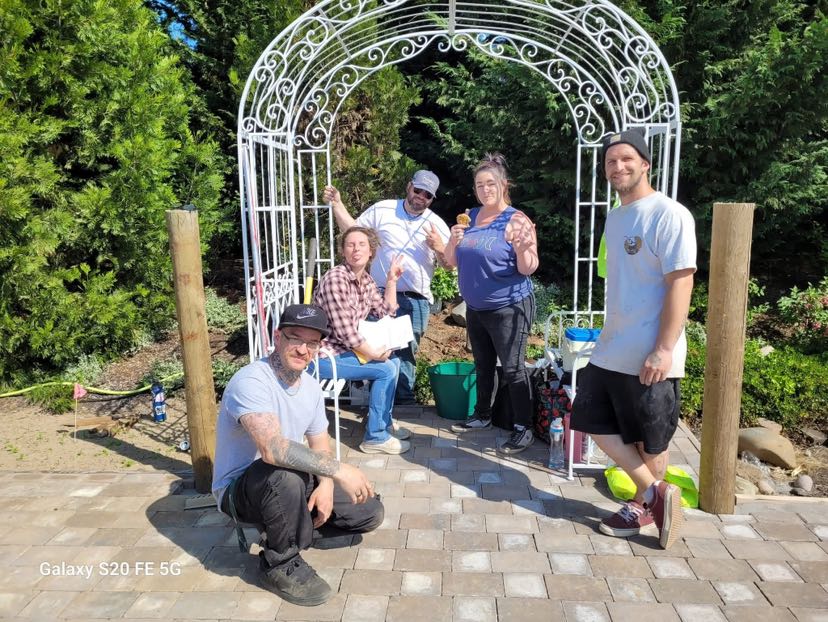
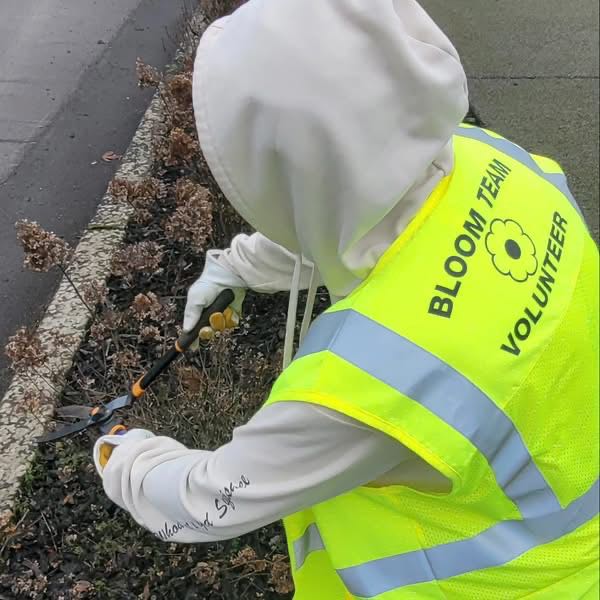
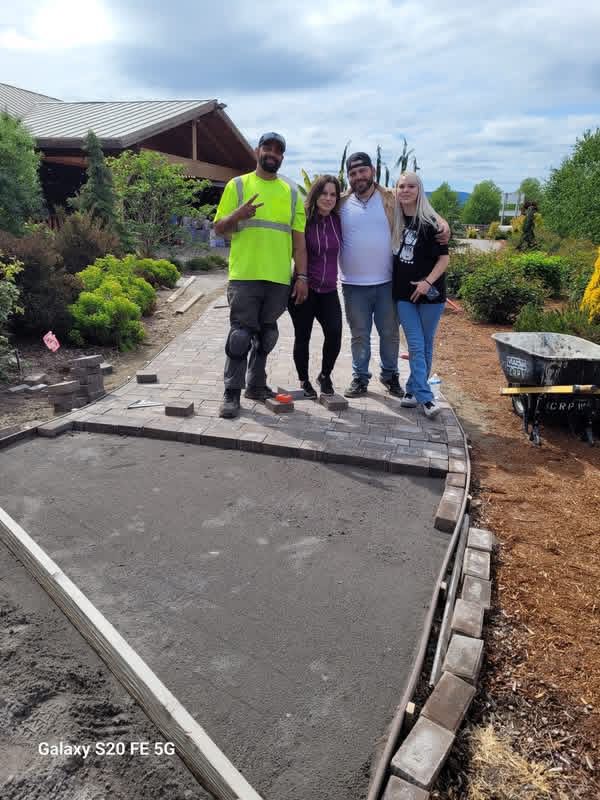
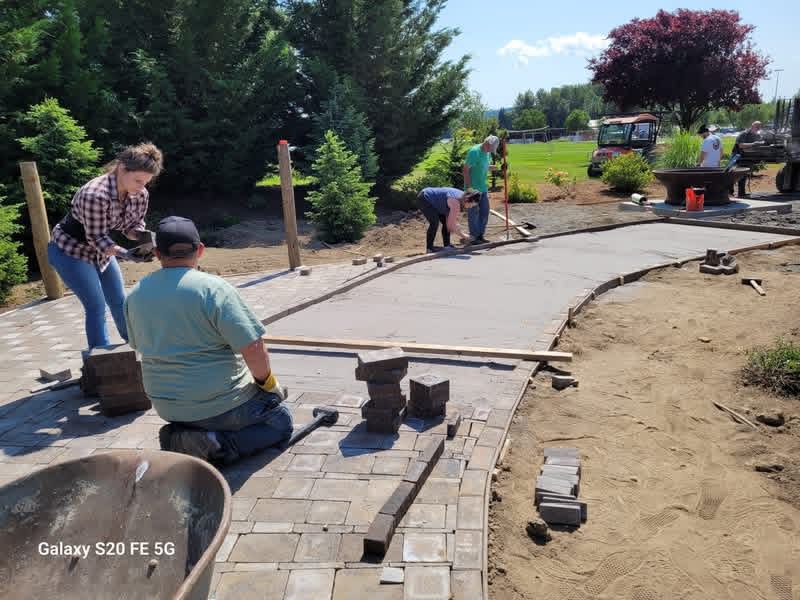
Cowlitz County Drug Court participants have built a strong, mutually beneficial partnership with the City of Castle Rock, North County Recreation, and the Blooms team to help rebuild and beautify the community. Through this work, participants gain purpose, a sense of accomplishment, hands-on skills, and the opportunity to give back. The agencies involved provide meaningful outlets for learning, contributing to projects larger than themselves, demonstrating that second chances are real, and fostering a strong sense of community among everyone working together.
Day 15: Alumni Spotlight: Marshall D. – Pacific County Drug Court A- Grays Harbor Therapeutic Court
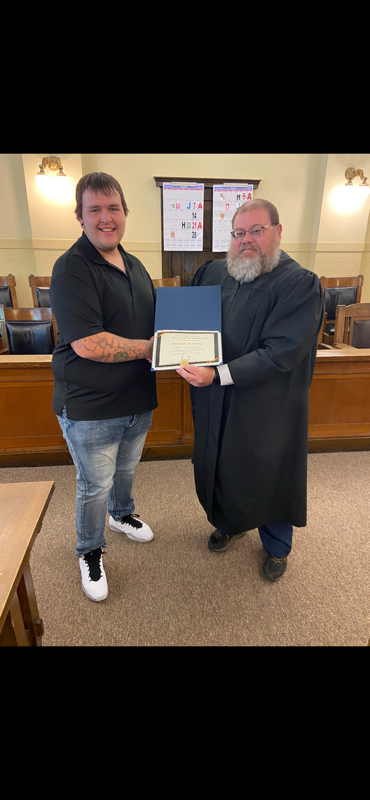
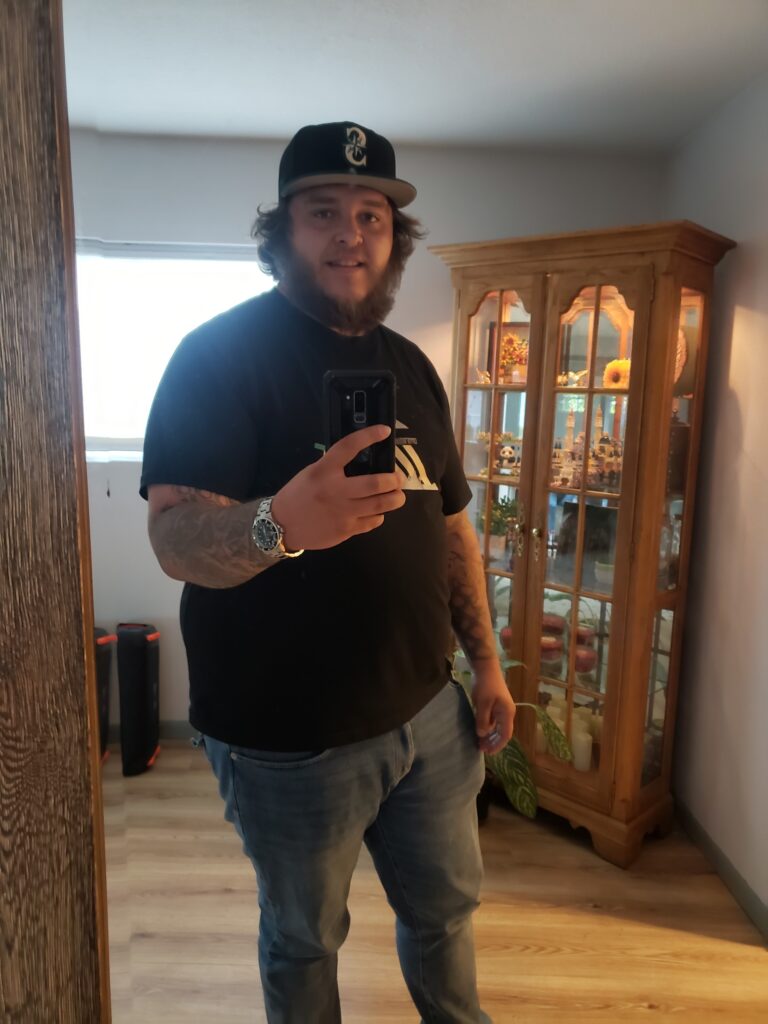
From Marshall:
To the Therapeutic Court Association of Washington
I am writing to express my sincere gratitude for the Drug Court program and the life-changing impact it has had on me.
Before entering Pacific County Drug Court, I spent nearly 13 years in and out of jail and prison because of my addiction and the lifestyle that came with it. Drugs were a daily part of my life, and it was a habit that was extremely difficult to shake. I had become trapped in a cycle that I honestly did not know how to escape. Drug Court gave me more than sobriety — it retrained me to live as a productive and responsible member of society. It taught me structure, accountability, discipline, and how to believe in myself again. Most importantly, it taught me how to live a normal life again.
I fought hard for the opportunity to get my foot in the door and be accepted into the program. Before I was accepted, I made promises to the panel about the changes I intended to make in my life, and I took great pride in keeping my word. Drug Court gave me the opportunity, but I also understood that it was my responsibility to fully commit myself to the process and the work required to change my life.
I am not proud of many of the mistakes I made in my past. At one point in my life, I was quite the nuisance to my community because of my addiction and criminal behavior. Today, I can say with certainty that this program works. I am living proof of that.
One of the most important things the program gave me was purpose. Instead of viewing my past as something shameful, I learned that my lived experience could actually help other people who are struggling with many of the same issues I once faced.
Before I graduated from Drug Court, I was fortunate enough to become employed at Coastal Community Action Program as a Housing Care Coordinator, and eventually worked my way up to Jail Reentry Coordinator for Pacific County. That alone is something I never imagined would have been possible during the years I struggled with addiction and incarceration.
I was also directly involved in the opening of one of Pacific County’s first male transitional housing programs. Being part of something that provides stability, structure, and hope to individuals reentering society has been incredibly meaningful to me because I understand firsthand how critical those opportunities are.
I truly feel this work is my calling. Lived experience matters. The people I work with know that I understand their struggles because I have lived them myself. That connection allows me to build trust, offer guidance, and show others that real change is possible. I am able to serve as proof that recovery and rebuilding a meaningful life can happen with the right support and accountability.
Recovery is still something I actively work on every day. I continue to attend recovery support groups, and I still work the 12 steps. No matter how much time passes, I understand that I will always be at risk for substance abuse, and that understanding keeps me vigilant, accountable, and committed to maintaining my recovery.
I have been to prison multiple times in my past, and because of that experience, I truly believe programs like Drug Court have the power to change lives on a much larger scale. If there were a way to integrate these kinds of programs more deeply into correctional facilities, I believe it could transform countless lives and communities for the better.
Drug Court did not simply help me stay out of jail — it helped give me a future, a career, and an opportunity to give back to my community in a meaningful way. I am deeply grateful for the program, the people who dedicate themselves to it, and the belief they had in me when I struggled to believe in myself.
Thank you for the work you continue to do for individuals and families across Washington State. Programs like this save lives and strengthen communities every day.
Sincerely,
Marshall D.
Day 16: Benton County opens first Drug Court office!
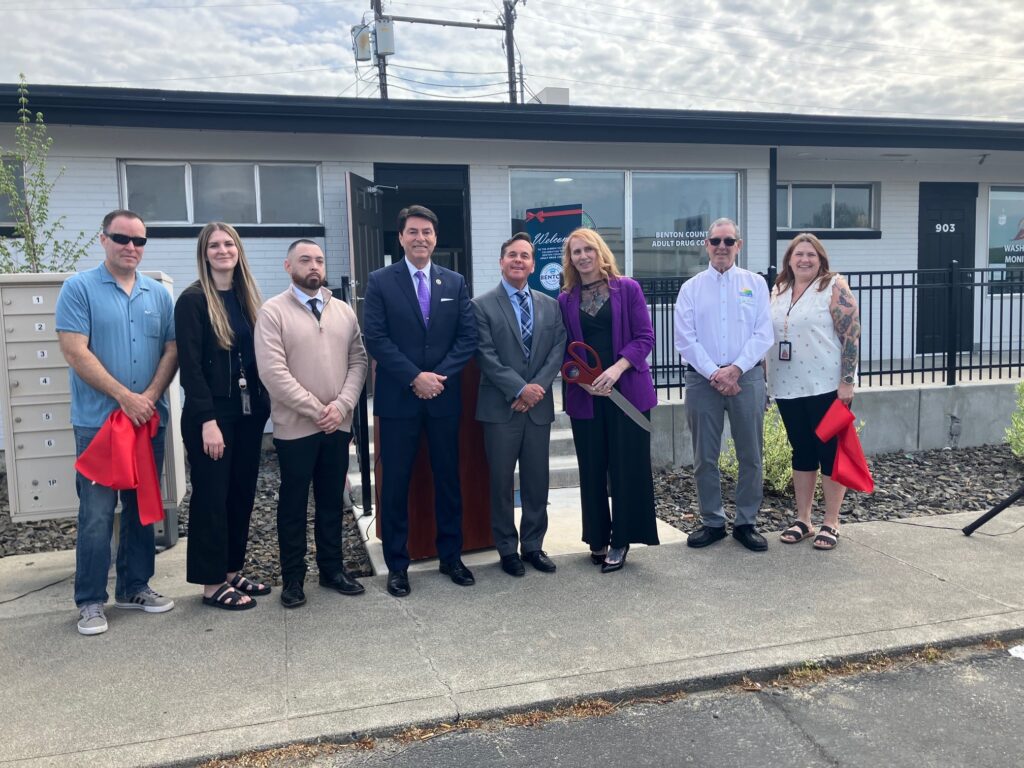
Benton County was able to open their first every Drug Court office on April 10th ,2026. We have been in operation since 2003 and have never had a place to call our own. We are currently in the heart of the recovery campus where the new Columbia Valley Recovery Center just opened on May 1st. Having all these services in one location will allow for soft hand offs as well as a one stop shop for individuals seeking recovery and support. I have included a few pictures from our grand opening and recent graduation. We also just had our May graduation on May 7th, 2026, graduating two individuals making our total number of graduates is 412 since opening.
Benton County opens drug court office on Auburn Street | Tri-City Herald
Watch the video HERE
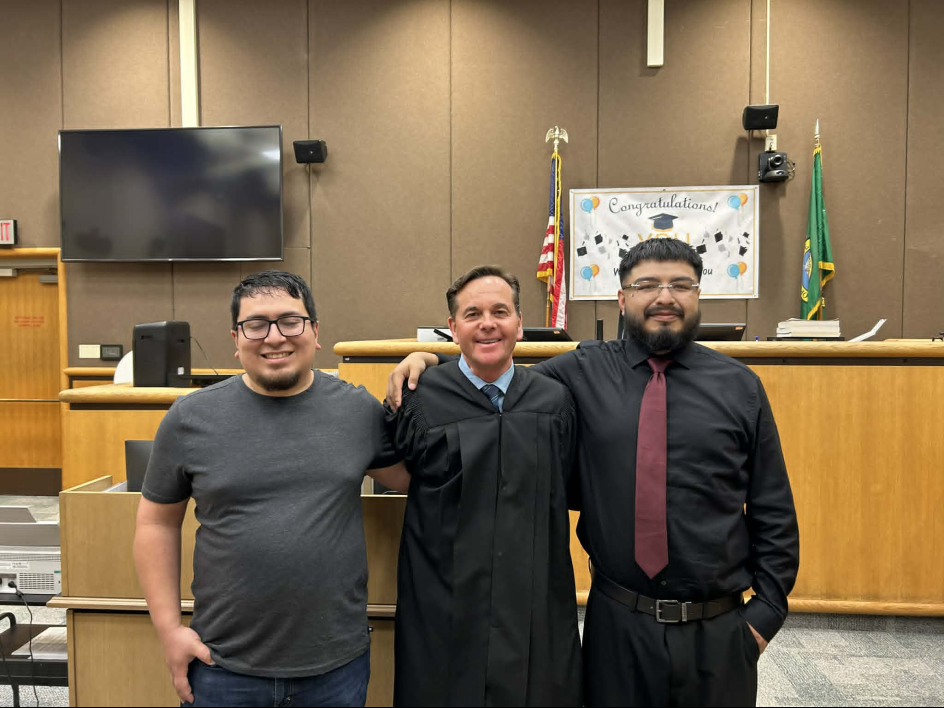
Day 17: Stevens County Drug Court Graduation
Stevens County Drug Court had a May graduation for a mother that reunited with her son!
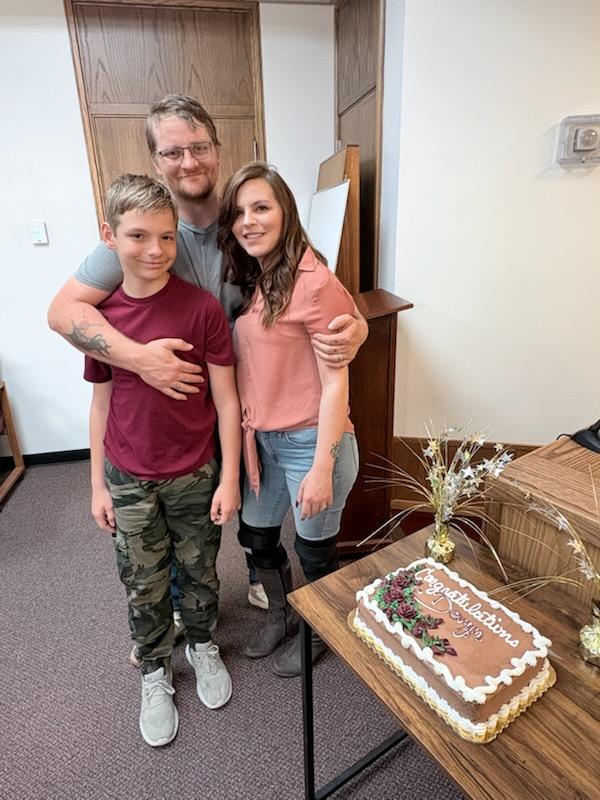
Day 18: Alumni Spotlight: Joe Barsana
May 18, 2026
Therapeutic courts and diversion work. I’m proof
By Joe Barsana
Special to The Seattle Times Read full article here : Therapeutic courts and diversion work. I’m proof | The Seattle Times
When I walked into a felony drug diversion courtroom in 2018, I was not coming from any kind of stability. I was coming straight off the streets.
For years, I had been trapped in a cycle I could not escape: using substances, running out, committing crimes to get more, getting arrested, getting booked into jail, getting released and starting the cycle all over again. My life was defined by chaos and survival. I had burned every bridge I had, and each day was about making it to the next one. I did not enter that courtroom with hope. I expected another system that would process me, hand me a consequence and move on.
Instead, I walked into a room full of people who genuinely cared. There was a judge who knew my name and a team that expected more from me than I expected from myself. It was a system built on accountability, compassion and empowerment, supported by people who meant it. That changed everything.
Therapeutic court did not help me by going easy on me. It helped me by holding me accountable. I had to show up, do the work, stop using and take responsibility for my decisions. At first, I resisted it. Then I adapted to it. Eventually, I grew because of it. That accountability did not break me. It built me. It gave me structure when I had none and taught me discipline I had never learned. It forced me to take ownership of a life I had completely lost control of. Through that process, something new emerged: real empowerment. Not the kind you talk about, but the kind you earn.

One of the biggest misconceptions today is that compassion and accountability are opposites. They are not. In therapeutic courts, they work together. Compassion does not mean lowering expectations. It means recognizing that people grow through support, not fear. It means understanding that relapse, setbacks, and mistakes are part of the process, not signs of failure. In therapeutic courts, people are supported even when they struggle, even when they slip, even when they are still learning how to stand on their own.
That support is not the absence of accountability. It is the foundation of it. Accountability, compassion, structure and love are all tools used together to help people rebuild their lives.
Somewhere along the way, the word “diversion” became misunderstood. Diversion is not a free pass or a way to avoid consequences. Diversion only works when you divert someone away from harm while also expecting something meaningful from them. And at the heart of diversion is a simple truth: We meet people where they are, but we do not leave them there. Therapeutic courts understand that people enter the system in crisis, but with the right expectations, support, and structure, they can leave with stability, dignity, and purpose.
Recovery itself is often misunderstood in the same way. Accountability in recovery is not just about stopping a behavior. It is about growing into a healthier version of yourself. Recovery looks different for everyone, and if someone is moving their life forward, no matter what that looks like, I will always support that. Therapeutic courts recognize that progress is not linear. What matters is that people are moving toward a life they can sustain.
Today, I do not just talk about therapeutic courts. I work in them. I advocate for them. And I have watched thousands of people walk the same path I did: entering the system broken and leaving with purpose. I have seen people gain jobs, rebuild families, find stability and step into leadership roles in their communities. That is not theory. That is real. Diversion through therapeutic courts work because they expect more from people and then provide the structure and support needed to rise to that expectation.
I am not an exception. I am the result of what happens when accountability turns into empowerment and someone finally gets the chance to rebuild their life. Therapeutic courts work. I am living proof.
Joe Barsana: is a Certified Peer Specialist, recovery coach, and Drug Court graduate who now works at the same drug court and serves on multiple boards. He is co-founder of the WA Therapeutic Court Alumni Association.

Day 19: King County declares May as Therapeutic Court Month!
May 5, 2026
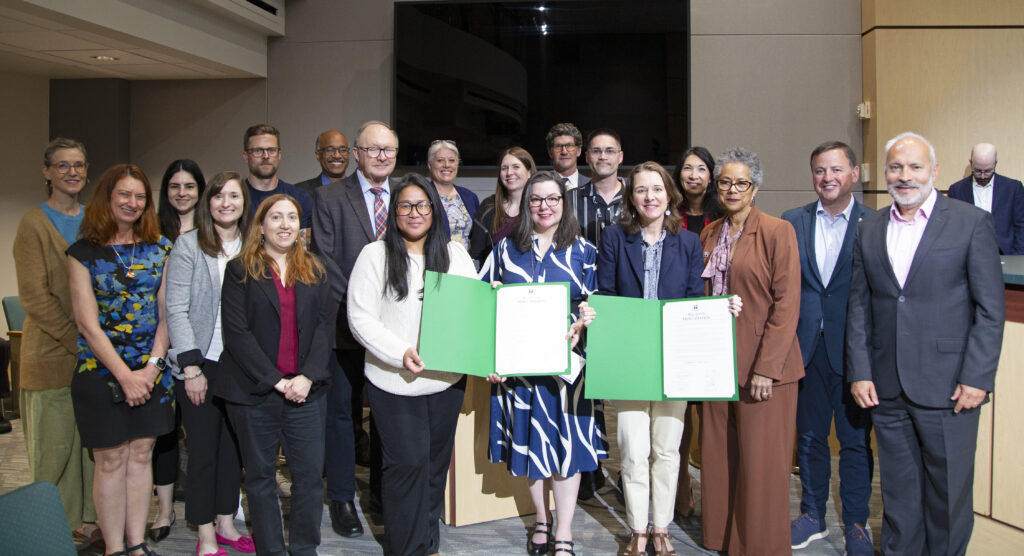
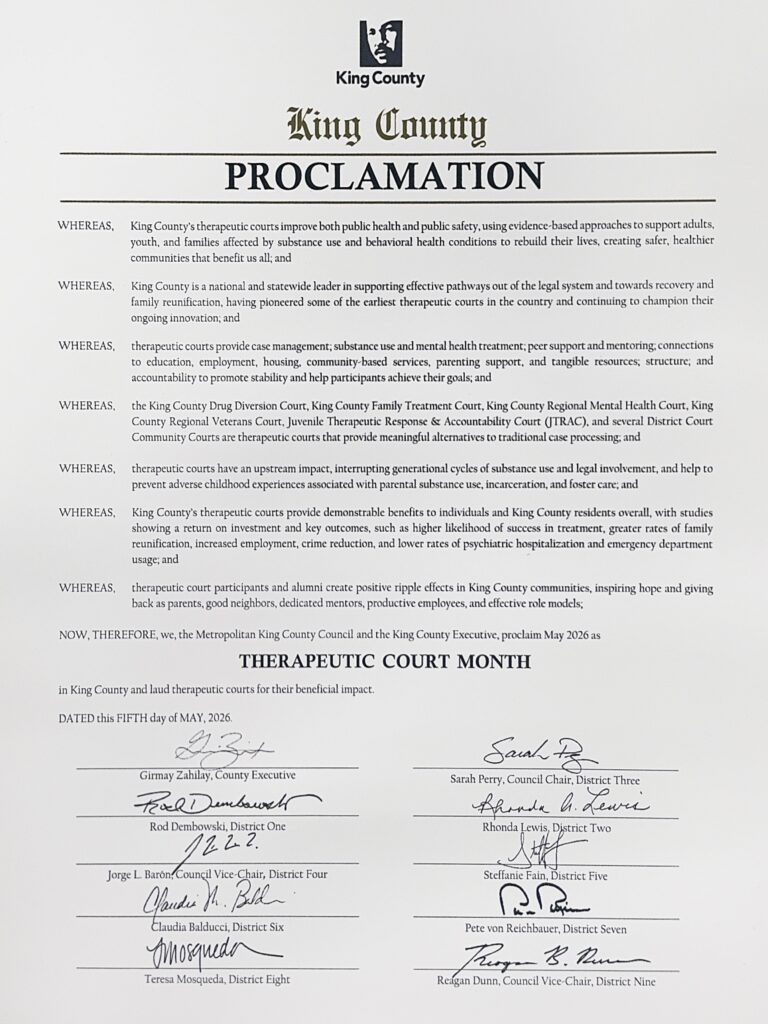
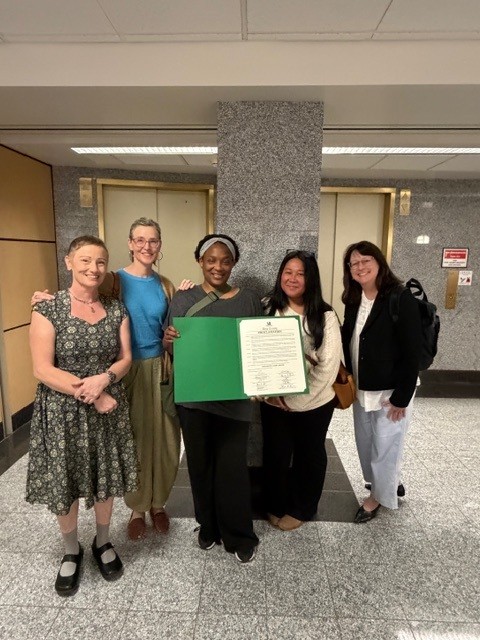
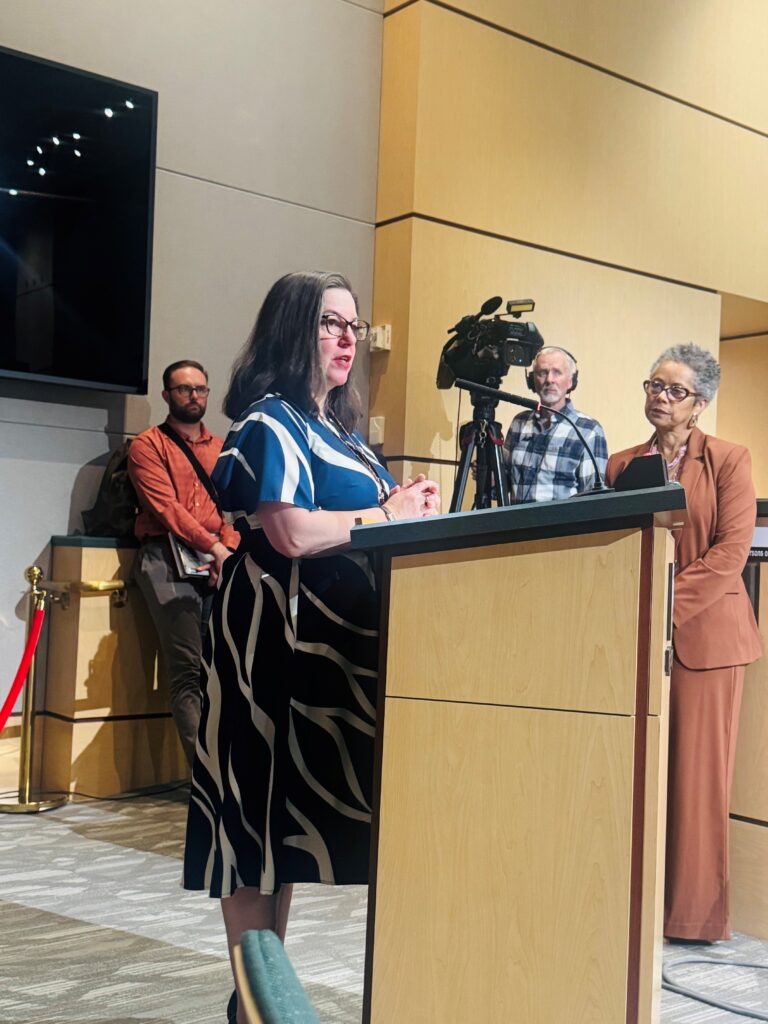
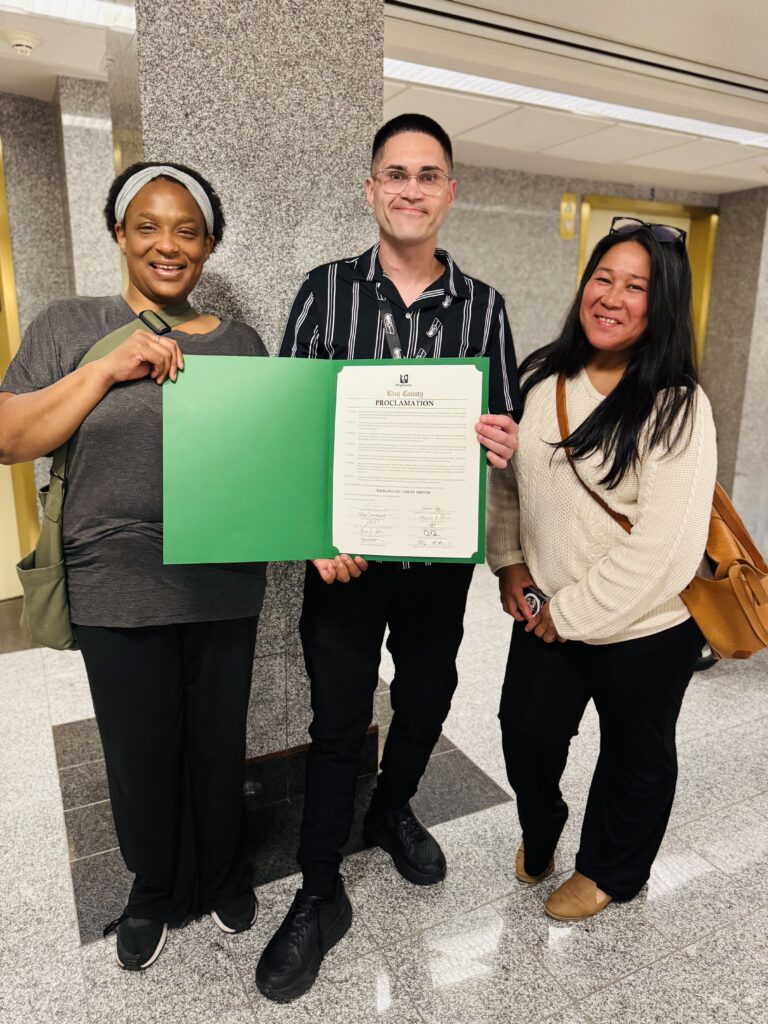
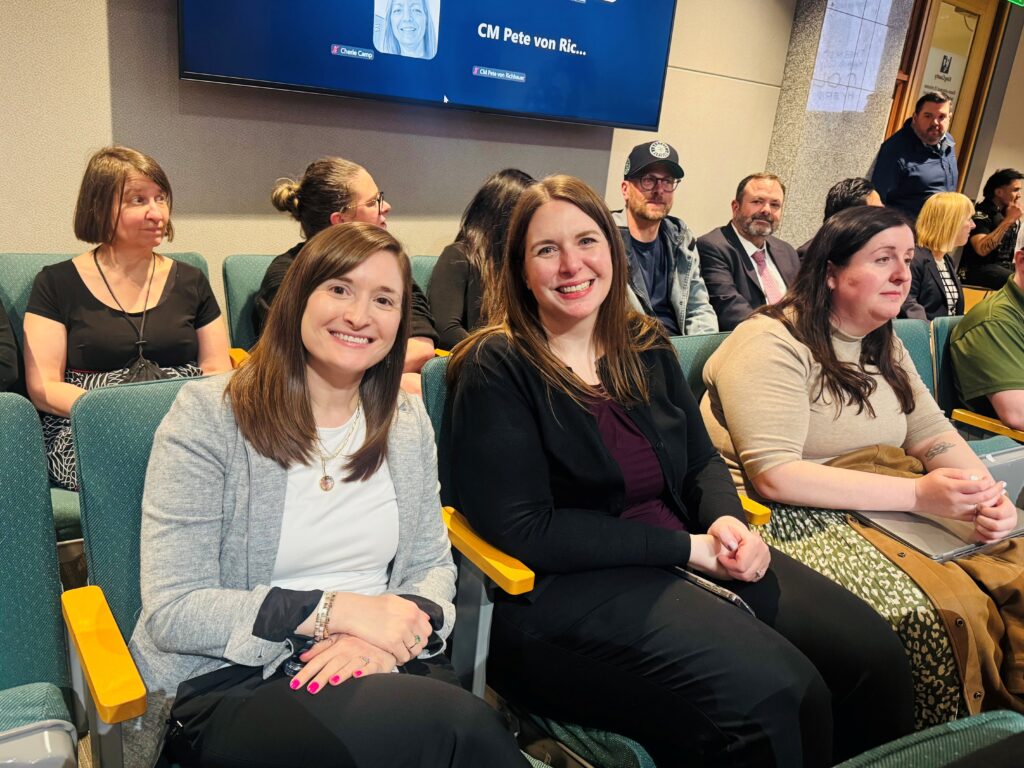
The Metropolitan King County Council and the King County Executive jointly proclaimed May 2026 as Therapeutic Court Month in King County!
Watch a video of the proclamation event here featuring:
- Councilmember Rhonda Lewis presenting the proclamation.
- King County Superior Court Presiding Judge Averil Rothrock.
- King County District Court Chief Presiding Judge Rebecca Robertson.
- King County Family Treatment Court Alumni, Tami Siemers.
Read: Therapeutic Courts Month Celebrates the Success of Participants (King County Superior Court blog post)
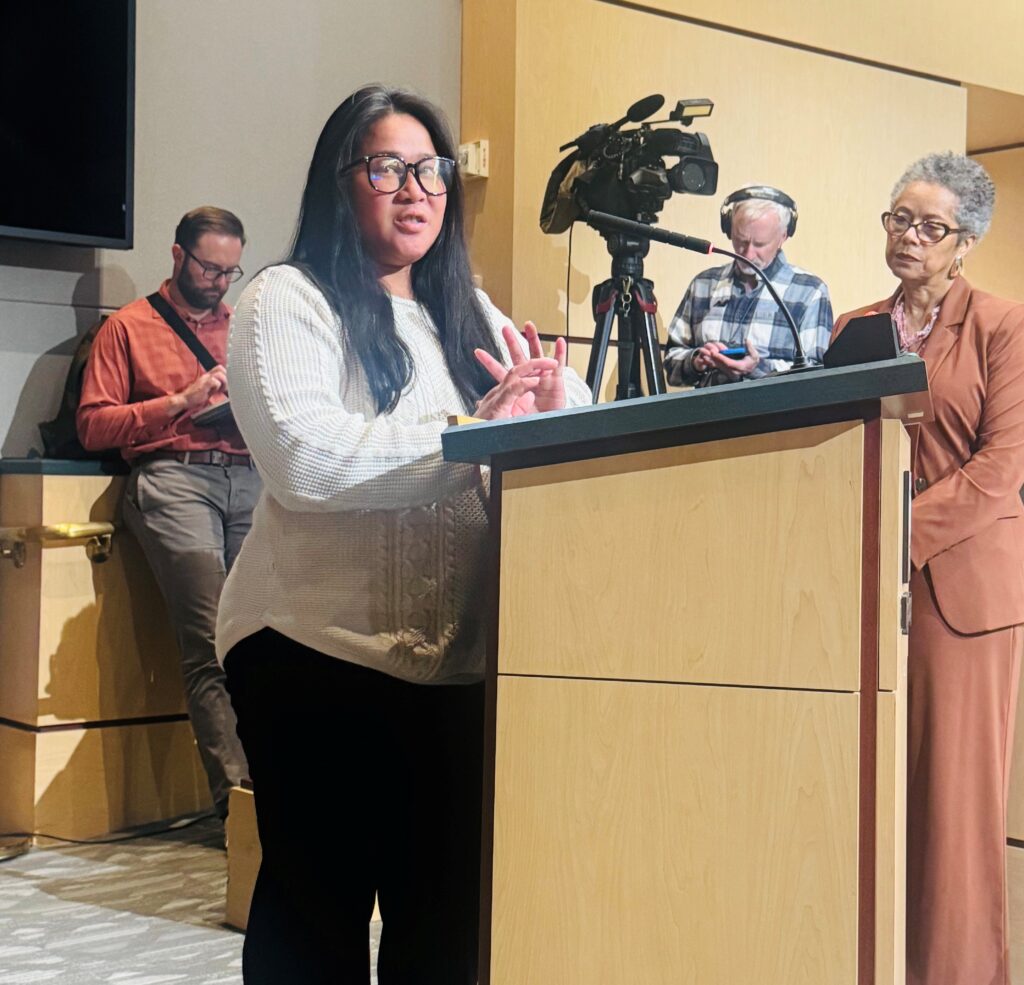
Tami Siemers is proof that therapeutic courts work. She grew up in foster care, without accountability, responsibility, or a sense of belonging, she said. When she ended up in jail due to her drug addiction, and her daughter was placed in foster care, King County Family Treatment Court provided an opportunity to break the cycle.
“Family Treatment Court didn’t just help me, it taught me how to contribute as a member of society, and gave me the tools, and knowledge, that I should’ve gotten growing up,” Siemers said.
That was ten years ago. Siemers is now a Family Recovery Support Specialist with King County Family Treatment Court, helping others rebuild their lives as she herself as done. At the King County Council, which proclaimed May Therapeutic Court Month in King County on May 5, 2026, Siemers said the therapeutic court approach helped her build healthy relationships.
She learned about “community assets, social assets, personal assets, family, friendship, and connection,” she said. With this knowledge, she was able to regain the “sense of belonging that I had lost as a teenager.”
King County was among the first counties in the nation to adopt a therapeutic court model, King County Drug Diversion Court, 30 years ago. King County now has Family Treatment Court King County Regional Mental Health Court, King County Regional Veterans Court, Juvenile Therapeutic Response & Accountability Court (JTRAC) and several District Court Community Courts.
These specialized courts provide participants with programs that address the reasons for their involvement in the criminal legal and dependency systems, with the goal of having their charges dismissed or their children returned home and avoiding future legal involvement.
King County Superior Court Judge Averil Rothrock said therapeutic courts are rooted in science and balance compassionate support with requirements that provide accountability.
“We are able to offer out and extend a hand to members of our community who are willing to take it and do the hard work that’s required to accept the interventions that we have,” Judge Rothrock said.
Because therapeutic courts interrupt generational cycles of substance use, foster care, and incarceration, they “are one of the most important, effective, humane, and fiscally responsible things that county government does,” said King County Councilmember Rhonda Lewis, who sponsored the proclamation.
Siemers, who is now working on a master’s degree in social work, said she’s grateful that the Family Treatment Court staff believed in her ability to change.
“I’m ten years clean and sober; I’m married. I have a teenage daughter. I have a place that I can call home and feel safe,” she said.
She said the combination of support and accountability provided by Family Treatment Court helped her sustain these changes over the long term: “They taught me how to fish and didn’t just hand me the fish.”

Day 20: Alumni Spotlight Zell Hughes- Benton County Drug Court Graduate
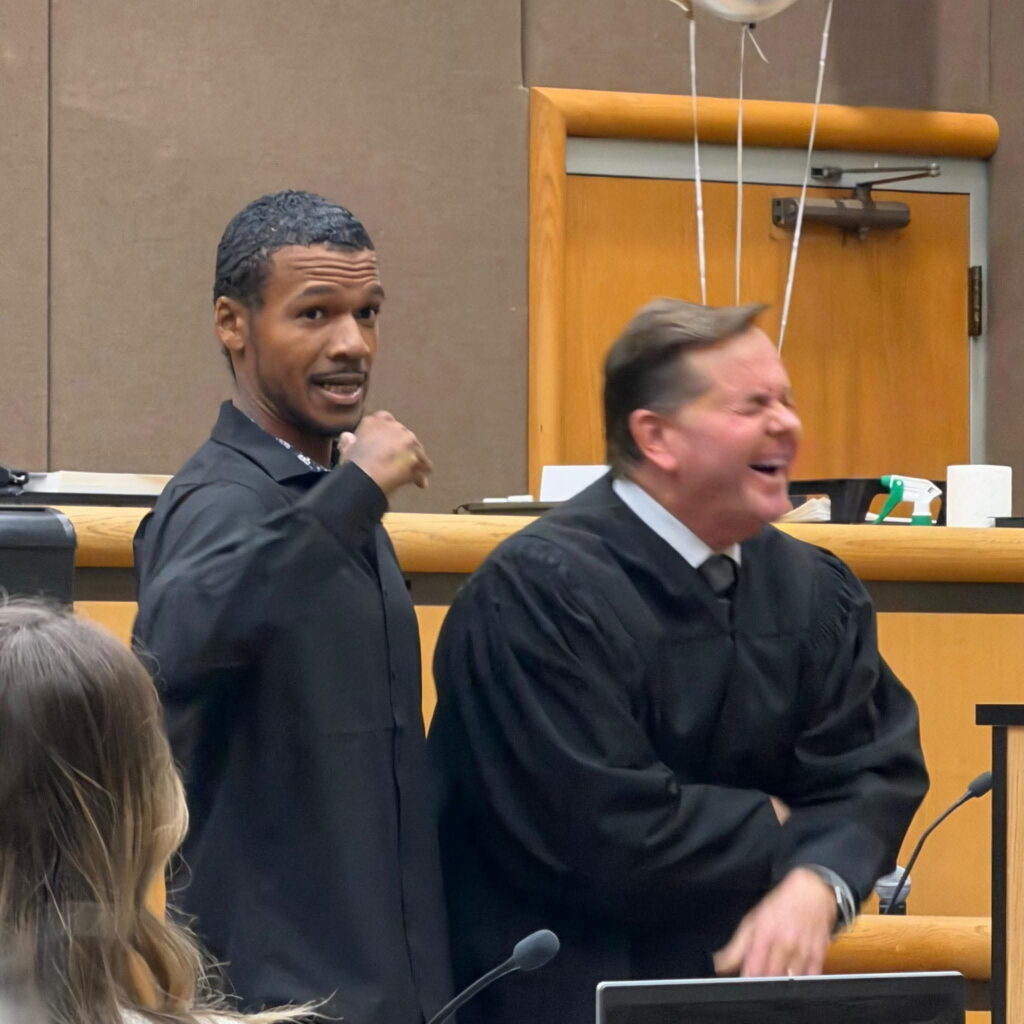
Benton County Adult Drug Court graduate Zell Hughes completed the program on November 6, 2025, and has continued giving back to the recovery community ever since. Following graduation, Zell started an alumni support group for Benton County Adult Drug Court participants, helping individuals entering the program through encouragement, accountability, and shared lived experience from someone who has successfully walked the path himself.
In addition to his ongoing recovery work, Zell will graduate from Columbia Basin College on June 18 with his AAS degree in Automotive Technology. After graduation, he will begin working for a local dealership, continuing to build a stable and successful future for himself and his family.
Today, Zell also has custody of his two sons, ages 11 and 16, and remains focused on creating a healthy, stable home environment for his family. His accomplishments reflect hard work, perseverance, personal accountability, and a strong commitment to both recovery and helping others succeed.
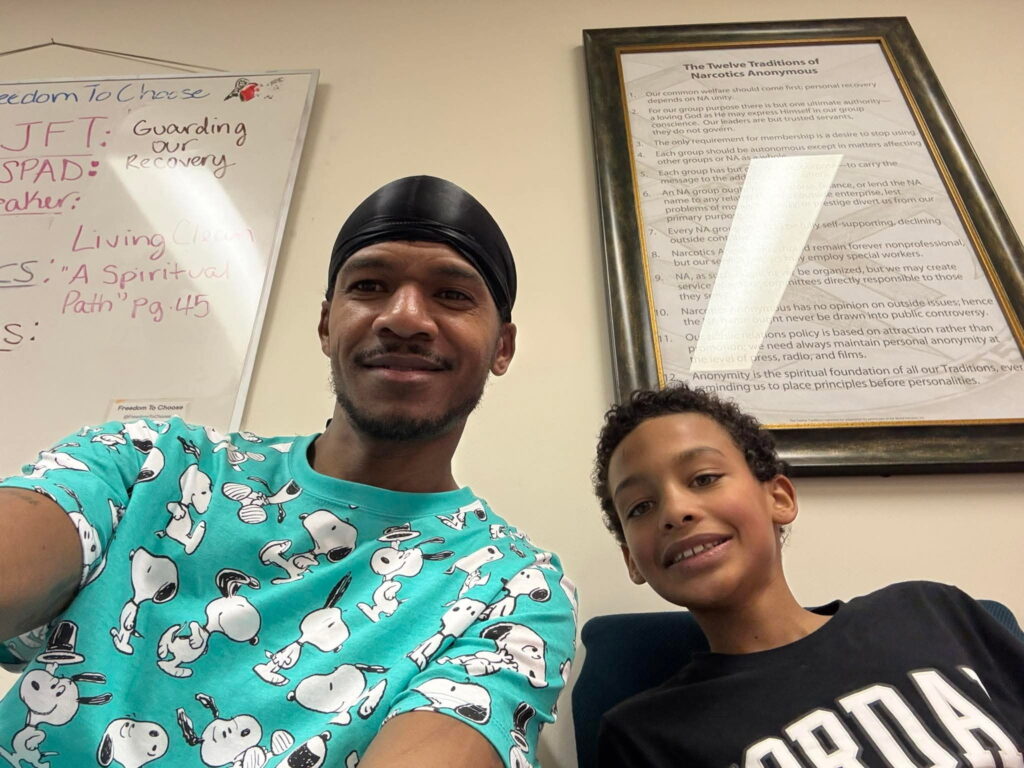
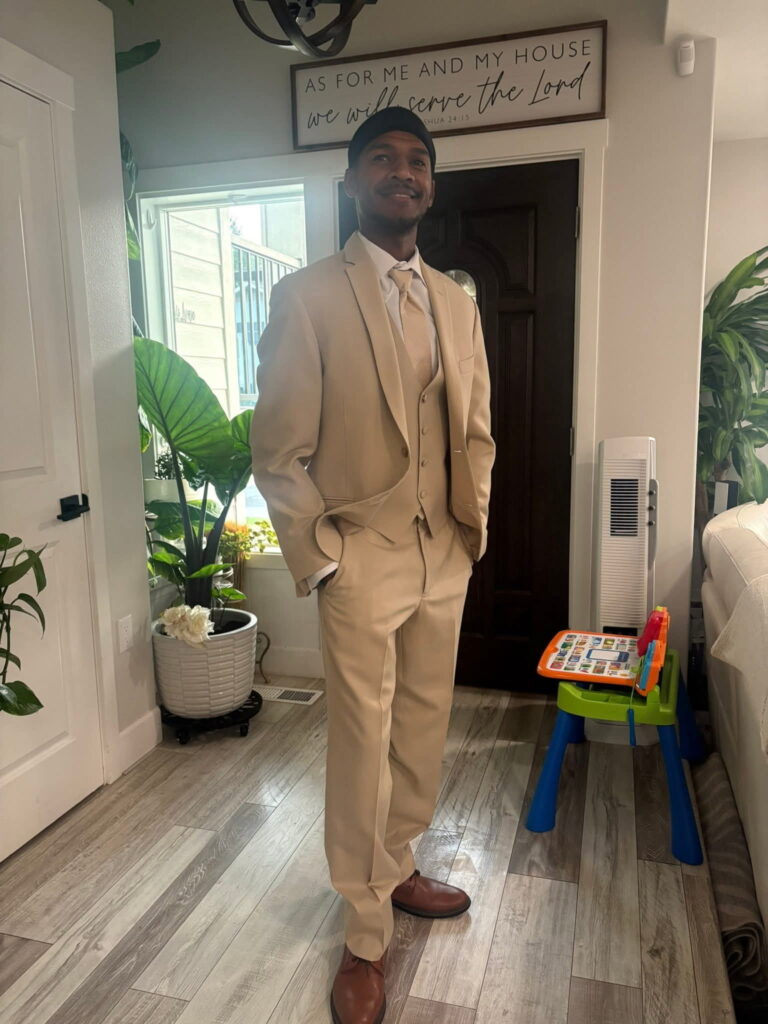
Day 21: Grant County celebrates during Therapeutic Court Month!
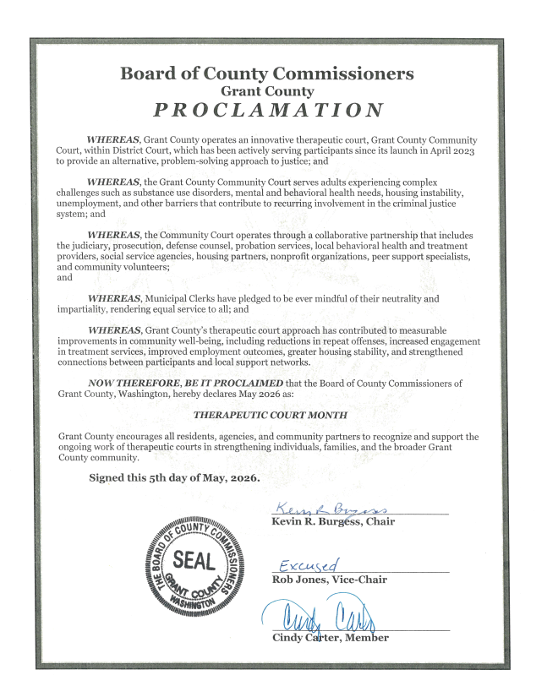
On Tuesday, May 5, the Board of County Commissioners made a proclamation re Therapeutic Court month!
On Wednesday, May 6, Grant County Community Court celebrated the graduations of two participants in our program: https://columbiabasinherald.com/news/2026/may/11/the-right-push/ (Graduate #17)
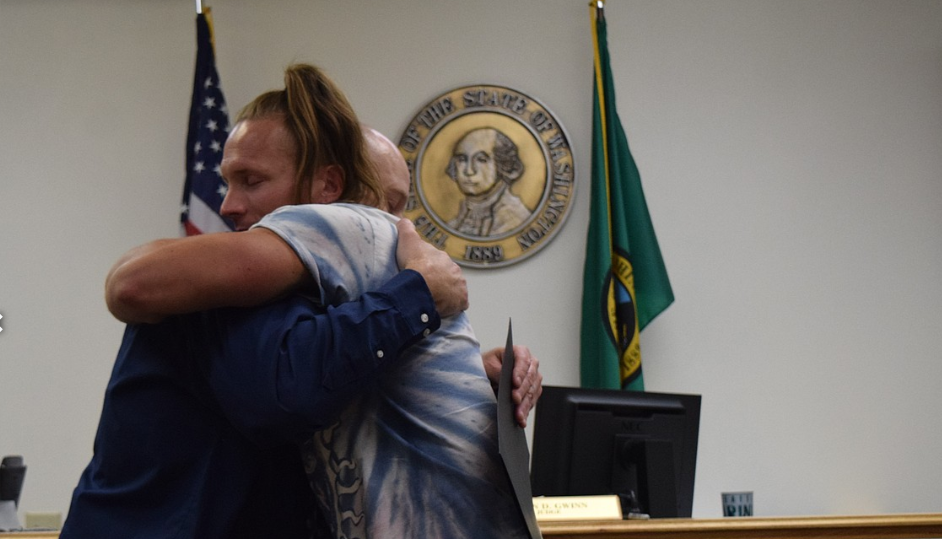
https://columbiabasinherald.com/news/2026/may/12/i-dont-plan-on-going-back/ (Graduate #18)

On Thursday, May 7, Grant County Community Court welcomed Ryan Leaf to tell his “story” at an open community event in Moses Lake. https://columbiabasinherald.com/news/2026/may/12/im-a-hope-dealer/
Earlier that day, Ryan Leaf and Judge Brian Gwinn led candid discussions with a group of area therapeutic court teams and their members about the impact of mental health issues in our court systems – what can be addressed, what needs to be addressed, how do you deal with stigma that comes with mental health and/or SUD-affected persons, and a variety of other topics focused on best practices. Team members came to Grant County from Okanogan County, Benton County and Franklin County courts along with other service providers that works hand-in-hand with these programs (including Goodwill, Recovery Navigator Program (Advance), Lourdes Behavioral Health, New Hope, Merit Resources, and Renew to name a few). NOTE: This mini retreat was made possible from a special project award received from AOC.
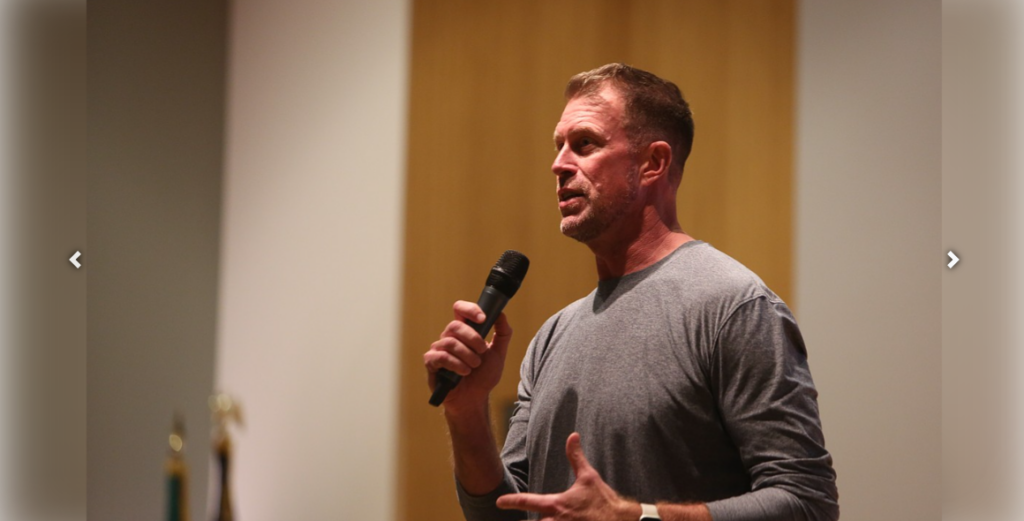
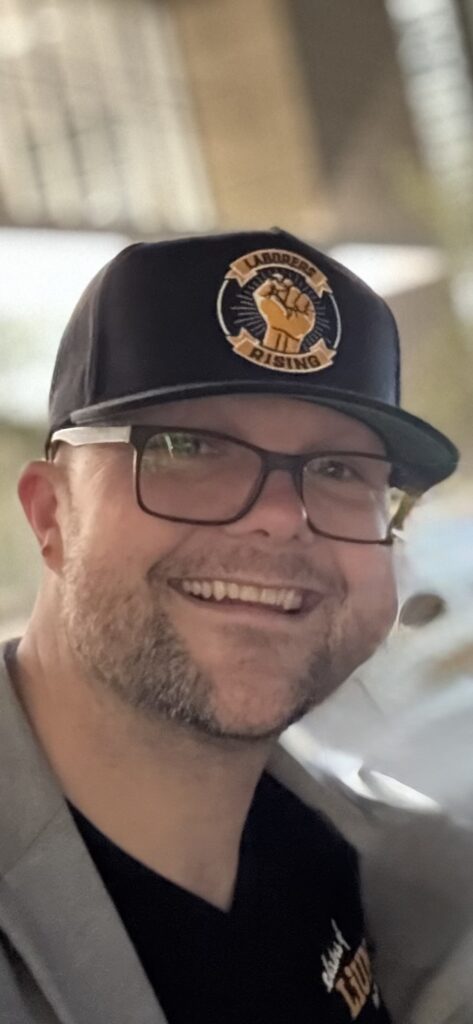
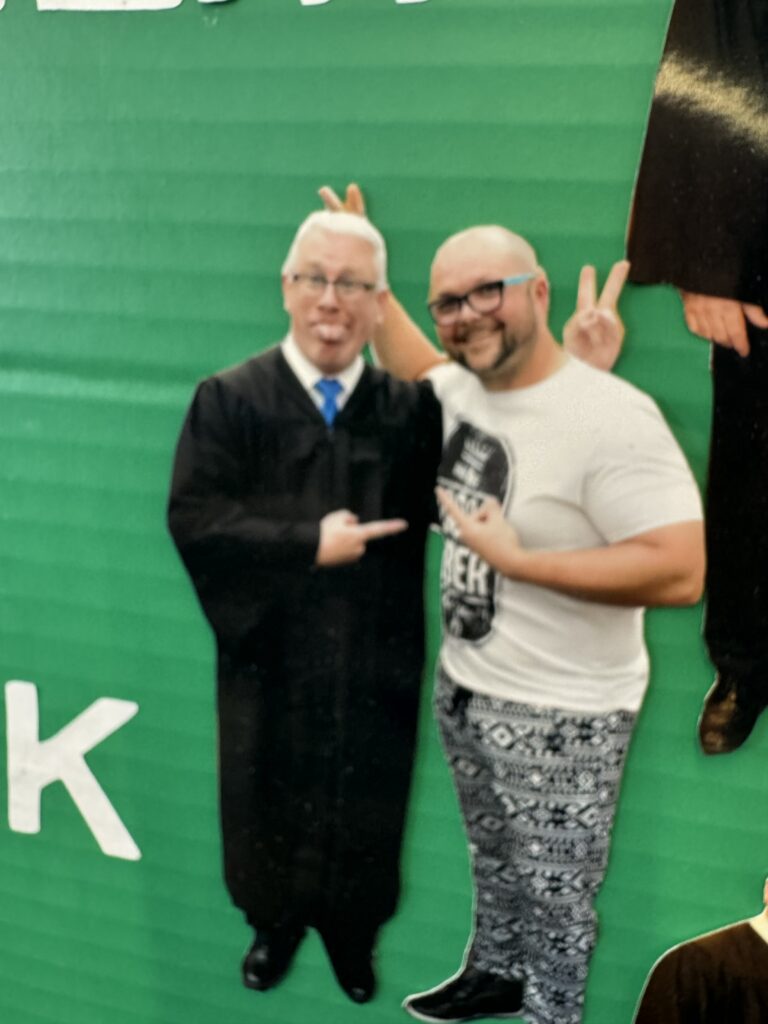
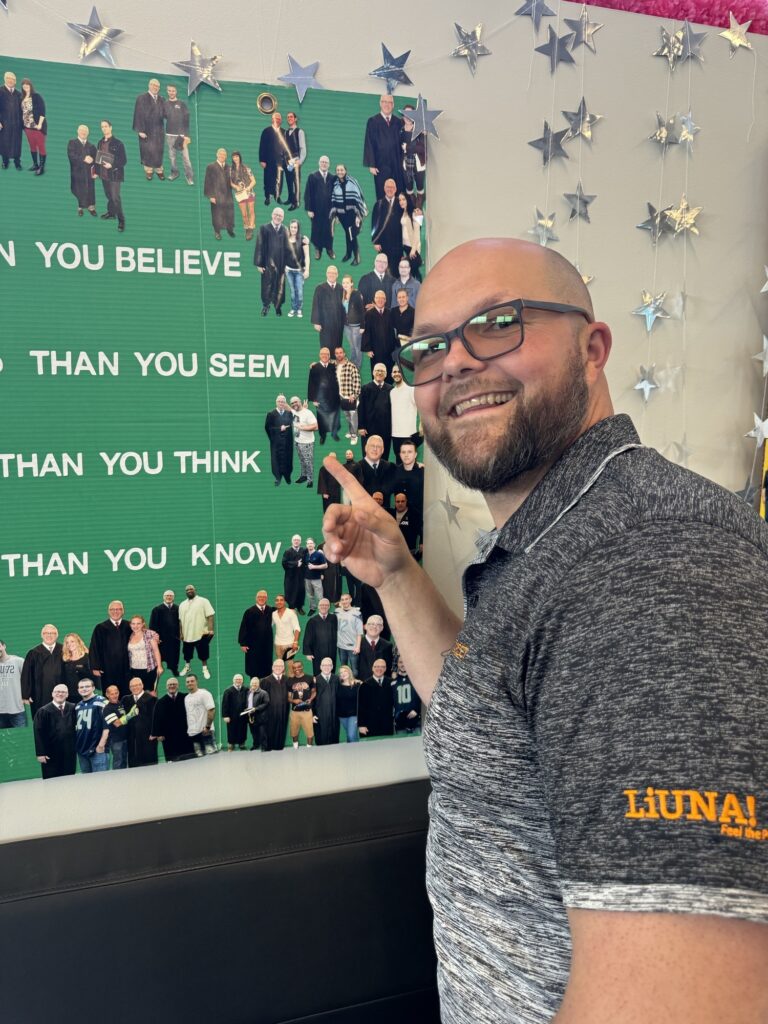
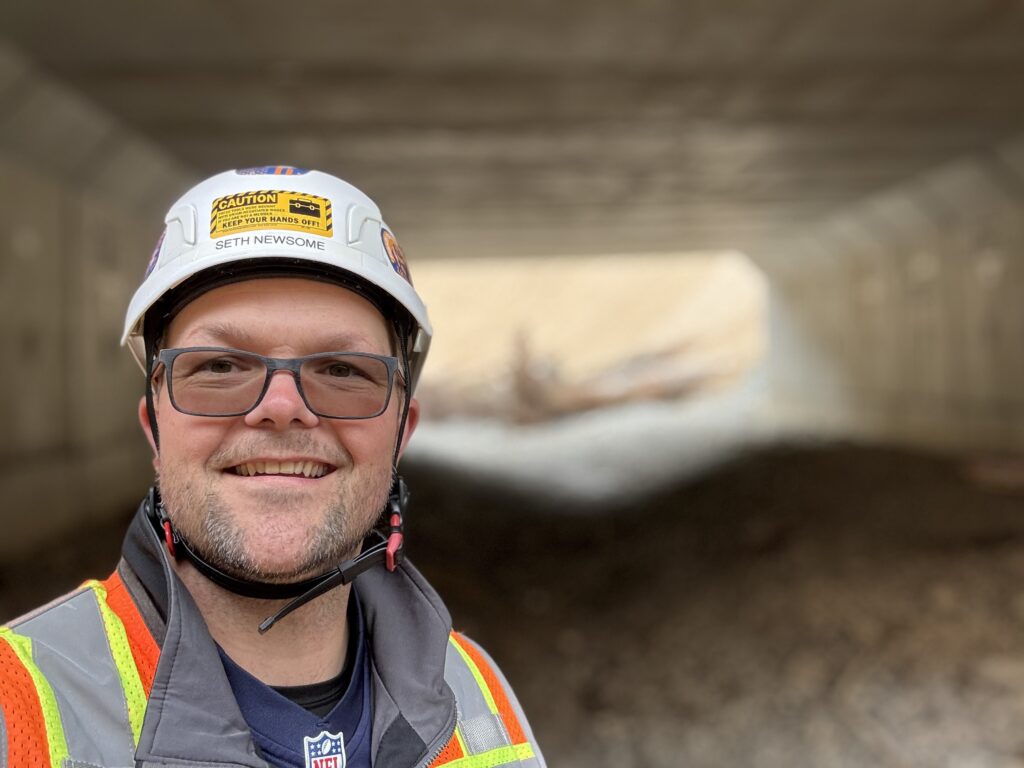
Day 22: Alumni Spotlight: Snohomish County Drug (Recovery) Court Graduate Seth Newsome
From Seth:
In 2016, I found myself in treatment, where a recovery group showed up and helped show me a way out of alcoholism and drug addiction. Shortly after leaving treatment, the consequences of my past behaviors during addiction caught up to me—and rightfully so. I was given the opportunity to enter the Snohomish County Drug Court, with the Honorable Judge Wilson presiding.
From the very beginning, the program felt different. The foundation was honesty. Judge Wilson and the program expected accountability, but they also believed participants could move forward toward a changed life. That combination created an environment where real recovery could begin.
I spent one year in the program, doing my best to live my way into a new way of life. The structure, guidance, accountability, and support—combined with my 12‑step fellowship—helped me overcome the mental obsession of addiction. Through action, I learned how to forgive myself for the horrible things I once believed and said about myself, while also learning how to make amends to the people and communities I harmed during my addiction.
Recovery helped me find purpose in service work, helping others, and giving back to the community. Today, I have the privilege of serving the community and supporting others who are seeking recovery, accountability, and a better path forward.
Today, I am also married to my best friend, and I get to be a son, a brother, an uncle, and a father—someone my family can lean on and trust. Recovery gave me the opportunity to rebuild relationships, restore purpose, and live a life rooted in service, honesty, and gratitude.
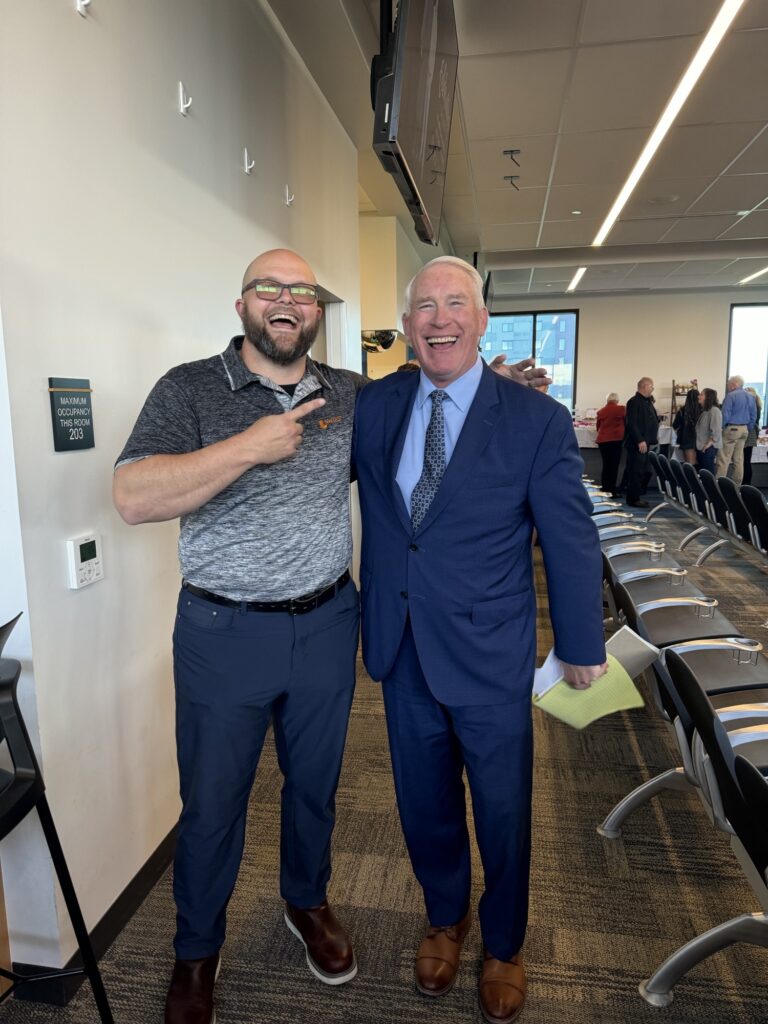
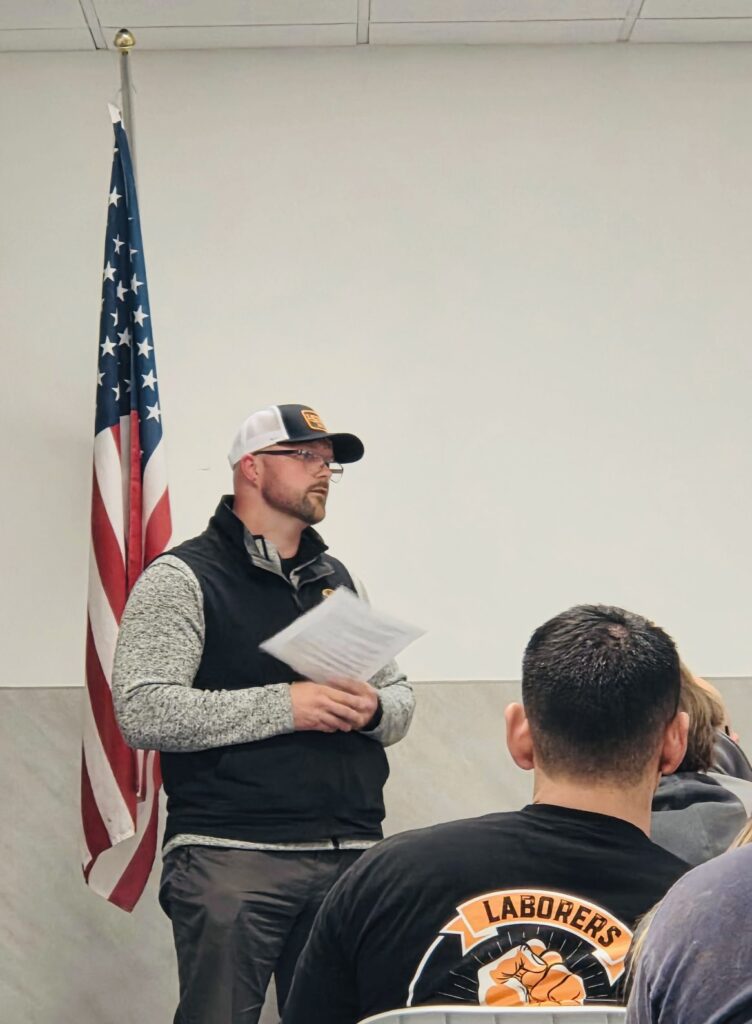
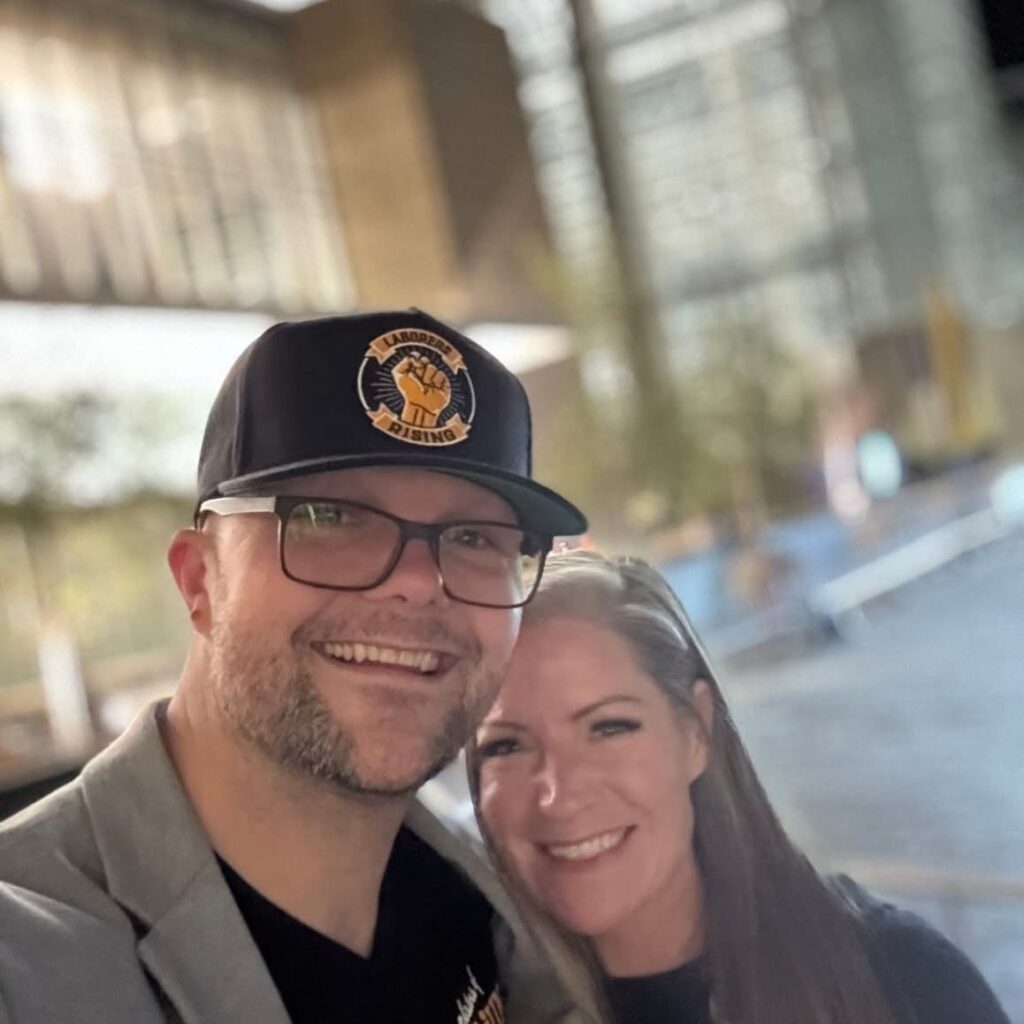
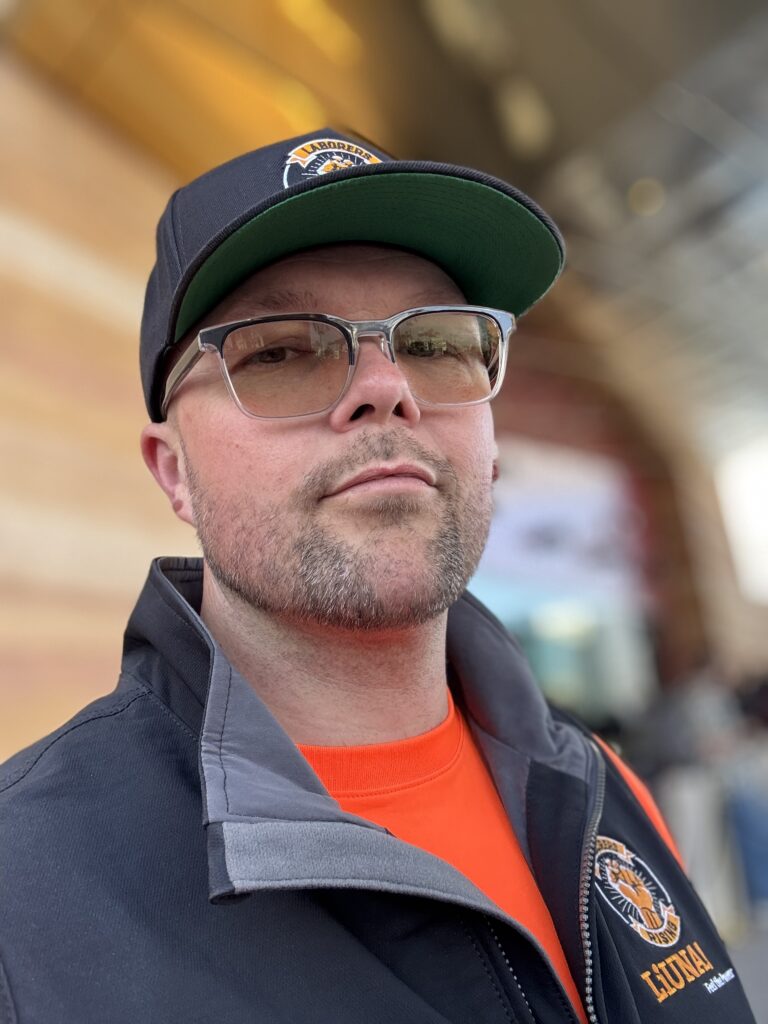
I am currently a union Business Agent for the 1,300 men and women of Laborers LiUNA Local 292, serving Snohomish, Skagit, Island, San Juan, and Whatcom Counties.
Day 23: Alumni Spotlight: Britta Harrison- Kitsap County Drug Court
Kitsap County’s Alumni Spotlight of the Week is on Britta Harrison. Britta graduated from Kitsap County’s Drug Court in 2020. Since then, she has earned her bachelor’s degree in psychology and information technology administrative management. She also completed the Substance Use Disorder Professional Case Manager Certificate Program at Olympic College.
In 2024, Britta began working for the Kitsap County Behavioral Health Court, where she collaborates directly with participants and the team. This year, she has played a key role in organizing the Therapeutic Court Month celebration. Britta shared her personal story with the Kitsap County Board of Commissioners when they declared May as Therapeutic Courts Month. Additionally, she organized a work service party for all the therapeutic courts on May 8th and has been actively involved with the county’s alumni group to plan various events.
Britta has made many positive contributions. She is often seen working with participants helping them meet their basic needs, housing, vocational and just being a peer that gets it. Kitsap County Therapeutic Courts is lucky to have her.
Day 24: Alumni Spotlight: Yakima County Drug Court Graduate Natalia Camarillo
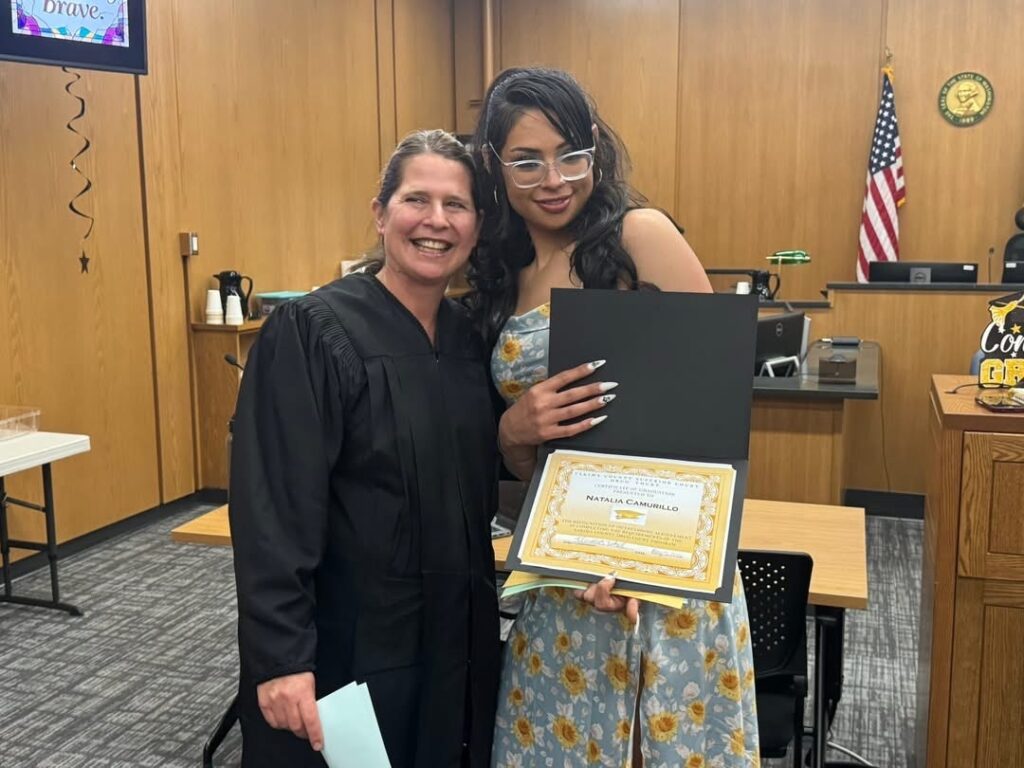
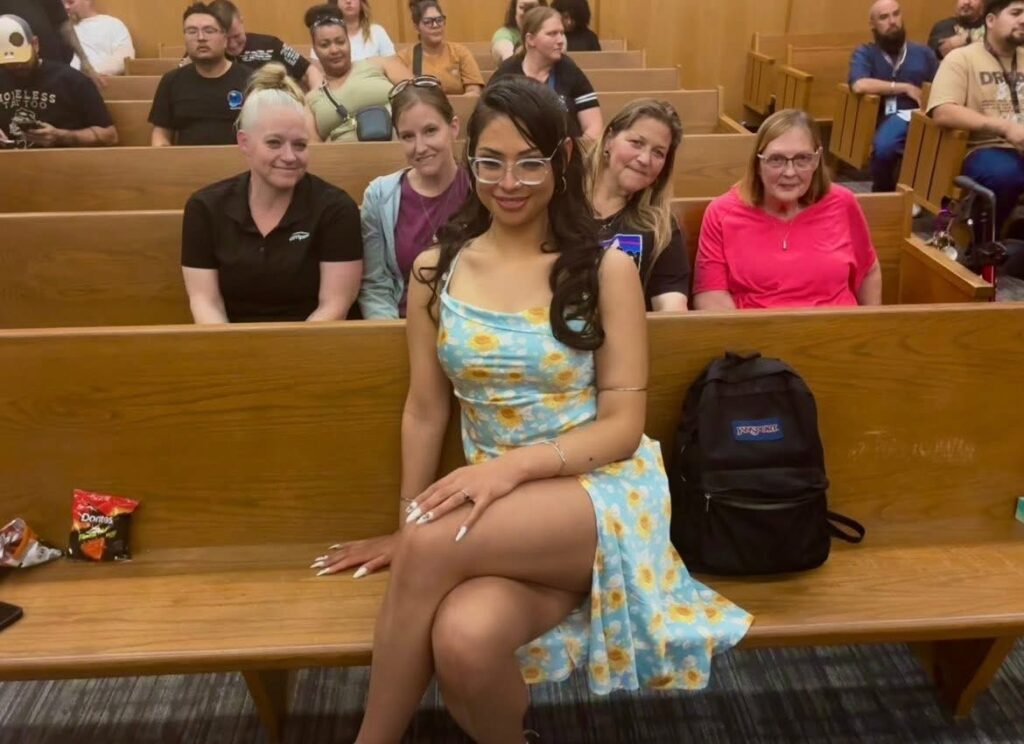
On May 5, I proudly graduated from the Yakima County Drug Court this month and became an official alumni member! A moment that truly symbolizes getting my life back and stepping into a brighter future.
I am incredibly proud to be part of the Yakima County Drug Court Alumni and even more honored to help start the alumni association for my community so others in recovery continue to have support, encouragement, and hope.
This journey has changed my life in so many ways, and my next goal is to become a Substance Use Disorder (SUD) counselor so I can help others find recovery, healing, and the same second chance that was given to me.

Day 25: It’s Therapeutic Court Month in Spokane County!
Oliver Waite NonStop Local Digital Producer
May 12, 2026
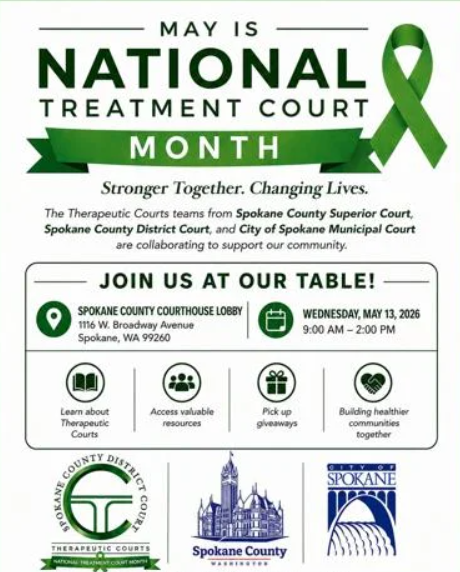
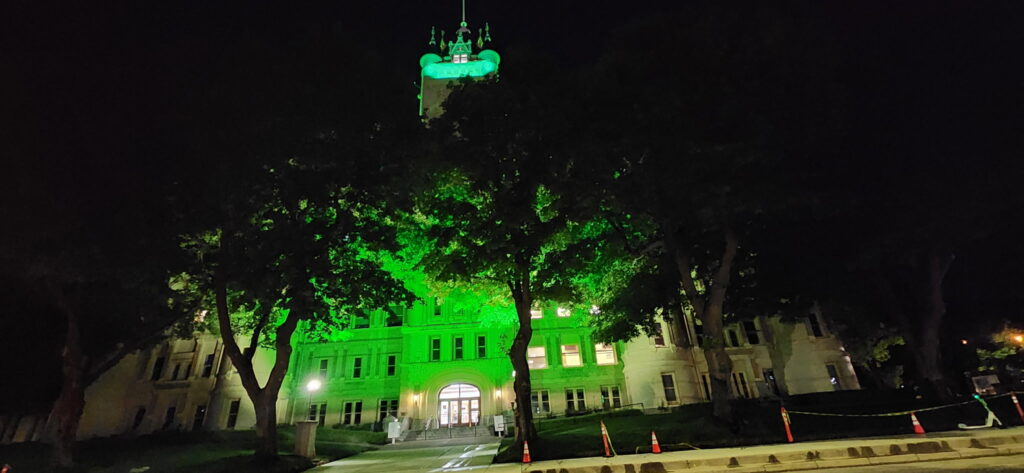
SPOKANE, Wash. – County officials announced on Tuesday that the Spokane County Courthouse tower will be illuminated with green lights this week in recognition of May being National Treatment Court Month and National Mental Health Awareness Month.
On Wednesday, from 9 a.m. until 2 p.m., the Therapeutic Court teams for Spokane County Superior Court and District Court as well as the City of Spokane’s Municipal Government Court are collaborating to host an event in the Spokane County Courthouse lobby, focused on supporting the community.
Organizers said attendees will have the opportunity to “learn about Therapeutic Courts, access valuable resources, and more.”





Search

Reduced Recidivism
88% of drug court participants in the state of Washington have no new felonies 36-months after treatment initiation and 77% have no new crimes at any level including no new misdemeanors during the same timeframe. (This is not just graduates – it is all participants.)

Higher Employment
231% sustained increase in employment for participants 18-months post treatment initiation.

Increased Earnings
191% increase in earnings for drug court participants
Latest Posts and Articles
-
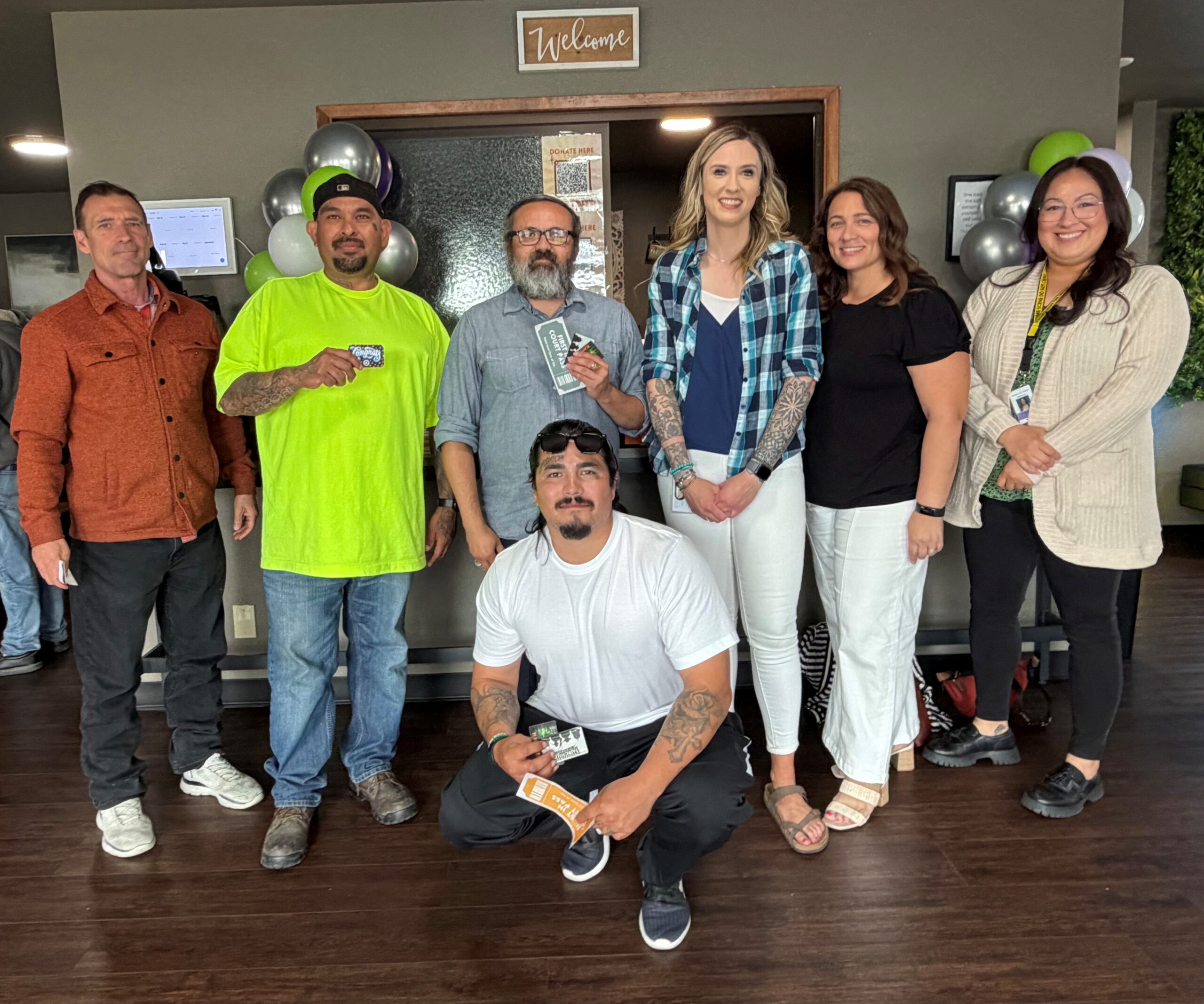
Day 26: Franklin County Therapeutic Court Builds Community Through Annual Scavenger Hunt
Pictured are the top three scavenger hunt winners for Franklin County Therapeutic Court…
-

Day 25: It’s Therapeutic Court Month in Spokane County!
Oliver Waite NonStop Local Digital Producer May 12, 2026 SPOKANE, Wash. – County officials…
-
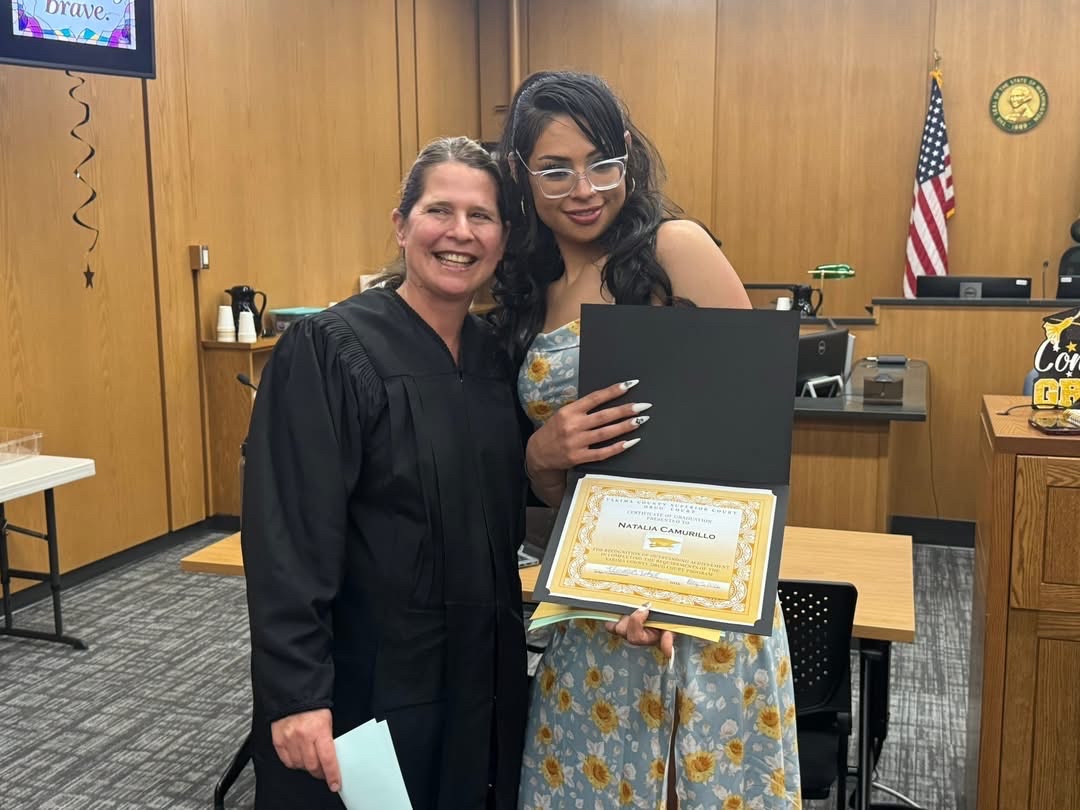
Day 24: Alumni Spotlight: Yakima County Drug Court Graduate Natalia Camarillo
From Natalia: On May 5, I proudly graduated from the Yakima County Drug…